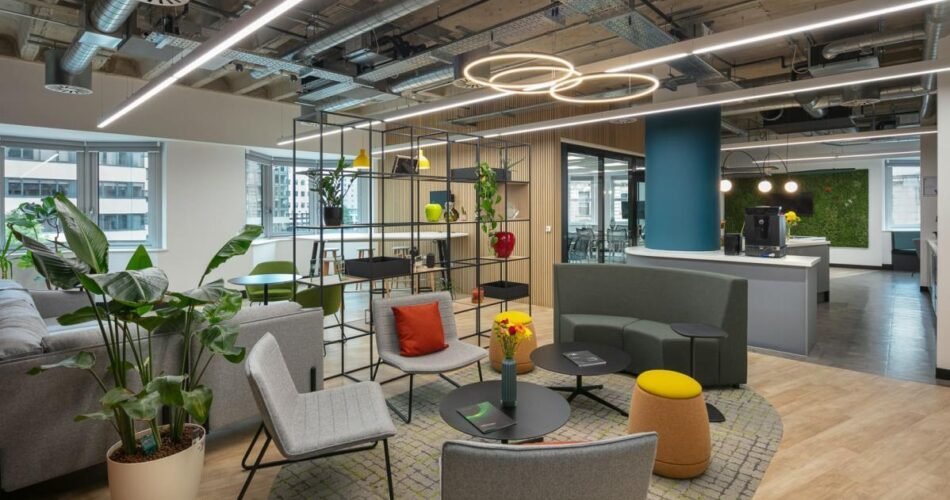
The modern business environment increasingly demands flexibility. Companies need workplaces that can support focused work, team collaboration, client meetings, and changing employee requirements without creating unnecessary operational complexity. This has increased interest in flexible office environments among startups, established companies, consultants, freelancers, and growing teams.
DLF Cyber City in Gurugram is a major commercial district with a substantial concentration of modern office buildings and business facilities. DLF describes the development as a 125-acre business district with approximately 15 million square feet of workspace, while its location provides connectivity through the Rapid Metro and road networks.
For professionals considering Coworking, the appeal of the area goes beyond having a desk. Accessibility, professional infrastructure, workspace flexibility, amenities, and the surrounding business environment all contribute to the overall workplace experience.
Why DLF Cyber City Is a Significant Business Location
A business location can influence commuting, client accessibility, networking opportunities, and everyday convenience. DLF Cyber City is positioned close to the Delhi-Gurugram border and NH-8, with Rapid Metro connectivity linking the business district to the wider area. DLF also notes that the development is around 9 kilometres from Delhi International Airport.
The district is surrounded by a large corporate ecosystem, with offices occupied by companies across different industries. This makes it particularly relevant for businesses that want to operate within an established commercial environment.
The presence of Cyber Hub also adds dining, retail, and entertainment facilities close to the office district. This can provide useful options for employees and businesses when they need restaurants, informal meeting locations, or everyday services.
Flexible Workspace Options for Different Teams
Not every business needs the same office arrangement. An independent consultant may require only a dedicated desk, while a growing startup may need multiple workstations and private meeting areas.
Modern flexible offices can accommodate different requirements through options such as:
- Shared workstations
- Dedicated desks
- Private cabins
- Team offices
- Meeting rooms
- Conference facilities
- Day-use workspace
- Managed office solutions
- Common areas
- High-speed internet
Current workspace listings in DLF Cyber City show a variety of coworking and managed-office options, including locations offering metro connectivity, meeting rooms, parking, and other workplace facilities.
For businesses exploring Coworking Spaces, this variety makes it possible to consider a workspace according to team size, working style, and operational requirements.
The Advantage of Ready-to-Use Infrastructure
Establishing a conventional office requires considerable preparation. Businesses may need to arrange furniture, internet services, meeting rooms, utilities, security, maintenance, and other workplace infrastructure.
A professionally managed workspace can reduce much of this initial workload. Instead of starting with an empty office, companies can move into an environment that has already been designed for professional use.
This can be useful for startups that want to begin operations quickly or established companies that need additional workspace for a particular project or expanding team.
The Space Search helps businesses explore flexible workspace solutions according to their location and requirements. A workspace can then be viewed as an adaptable business resource rather than a fixed office arrangement.
Supporting Startups and Growing Businesses
Growth often creates changing workspace requirements. A startup might begin with a small team and gradually add employees, while an established company may create a temporary project team or expand into a new market.
Flexible workspaces can help businesses accommodate these changes without immediately committing to a large permanent office.
A smaller team can begin with dedicated workstations, while companies with greater requirements can consider private offices or managed workspace arrangements. The ability to evaluate different formats can make workspace planning more adaptable.
For entrepreneurs, this can also allow more attention to be directed toward product development, sales, hiring, and customer relationships instead of managing every detail of office setup.
A Professional Environment for Client Meetings
The workplace also influences how businesses interact with clients and partners. A professional office environment can provide a more suitable setting for presentations, interviews, consultations, and business discussions.
Meeting rooms and conference facilities are particularly useful for companies that regularly interact with external stakeholders. Instead of conducting every meeting from a home office or informal location, professionals can use dedicated business facilities when required.
This can be valuable for consultants, agencies, financial professionals, technology companies, recruiters, and service providers that need a professional setting for client interactions.
Facilities That Matter in a Modern Workspace
The right workspace should support everyday activities rather than simply provide seating. Businesses should evaluate facilities based on how their teams actually work.
Reliable Internet
Most modern businesses depend on stable internet for communication, cloud platforms, video conferences, file sharing, and digital operations.
Meeting and Conference Rooms
Dedicated meeting spaces can provide privacy and a professional setting for internal discussions and external meetings.
Private Cabins
Private cabins can be useful for teams that need focused work areas or regularly handle confidential conversations.
Parking and Transportation
Accessibility is an important consideration for employees and visitors. DLF Cyber City benefits from Rapid Metro connectivity, road access, skywalks, and extensive parking infrastructure within the wider development.
Food and Everyday Amenities
Having restaurants, cafes, food options, banks, pharmacies, and other services close to the workplace can make the working day more convenient. DLF Cyber City includes access to Cyber Hub and other amenities within the development.
Security and Support
Businesses should also consider building security, reception services, housekeeping, maintenance, and other operational support when comparing workspace options.
An Environment for Freelancers and Remote Professionals
Flexible workspaces are not limited to large companies. Freelancers, independent consultants, remote employees, and entrepreneurs can also benefit from a professional working environment.
Working from home may be convenient, but it can sometimes create distractions or make client meetings difficult. A dedicated workspace provides a clearer distinction between professional and personal activities.
For remote teams, coworking offices can also provide a physical location for occasional meetings and collaborative sessions without requiring the company to maintain a permanent office for every employee.
This flexibility allows professionals to use workspace according to their actual schedules rather than following a traditional office model.
Encouraging Professional Interaction
One feature of shared work environments is the presence of professionals from different companies and industries.
A coworking environment can bring together entrepreneurs, consultants, technology professionals, creative teams, and service providers. While networking is never guaranteed, being surrounded by other professionals can create opportunities for conversations and knowledge sharing.
For independent professionals, this can make the working environment more interactive than working alone from home.
How to Choose the Right Workspace in DLF Cyber City
Businesses should start their search by identifying their actual workspace requirements.
First, determine the number of employees who will regularly use the office. Then consider whether shared desks, dedicated workstations, private cabins, or a larger team office is appropriate.
Accessibility should also be reviewed. If employees rely on public transportation, proximity to Rapid Metro can be an important consideration. Businesses should also think about parking and access for clients.
Next, compare internet connectivity, meeting rooms, privacy, working hours, security, common areas, pantry facilities, and administrative support.
Budget should be evaluated alongside the facilities being provided. A workspace that meets the team’s requirements can offer more practical value than simply choosing an office based on the lowest available cost.
When exploring Coworking Space in DLF Cyber City, businesses can compare workspace formats and identify an arrangement that aligns with their current operations.
Adapting to Changing Business Requirements
The modern office is becoming more flexible as businesses adopt hybrid teams, remote working, project-based hiring, and different employee schedules.
A fixed office may still be appropriate for some organisations, but flexible workspaces provide an alternative for companies that need greater adaptability.
DLF Cyber City already functions as a large-scale business ecosystem, with multiple office buildings, coworking operators, transportation connections, and supporting amenities. DLF’s own development information identifies coworking operators within the district, while current workspace directories list multiple flexible-office providers across Cyber City.
For businesses, the key is to select a workspace based on how the team actually works rather than choosing an office simply because it is located in a prominent business district.
Final Thoughts
DLF Cyber City provides an established corporate environment for businesses and professionals looking for flexible workplace solutions in Gurugram. Its office infrastructure, transportation connectivity, surrounding amenities, and range of workspace formats make it suitable for different types of working requirements.
The right office should provide more than a physical desk. It should support productivity, meetings, collaboration, communication, and the changing needs of the business.