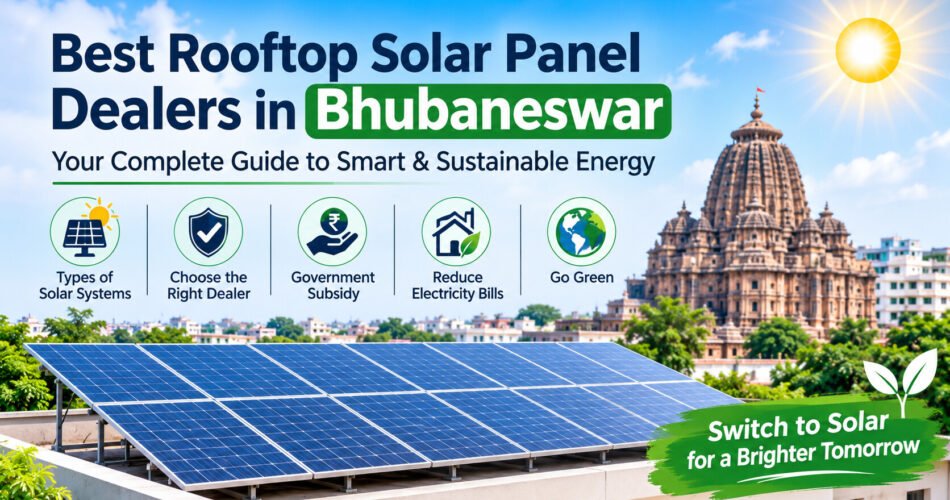
Rooftop solar panels are becoming an increasingly popular option for homeowners, businesses, and commercial property owners looking to generate electricity from sunlight. With suitable rooftop space and proper system planning, solar energy can help reduce dependence on grid electricity and manage long-term power expenses.
Choosing among the Best Rooftop Solar Panel Dealers in Bhubaneswar requires understanding the available solar technologies, installation procedures, equipment quality, maintenance requirements, and government subsidy provisions.
Bhubaneswar receives substantial sunlight throughout the year, making rooftop solar a practical option for many properties. However, selecting the right system involves more than comparing installation prices. Consumers should evaluate system capacity, panel efficiency, inverter specifications, installation quality, and after-sales support.
1. Why Is Rooftop Solar Installation Becoming Popular in Bhubaneswar?
Electricity consumption is an important consideration for residential and commercial properties. Air conditioners, refrigerators, lighting, computers, and other electrical appliances contribute to monthly power consumption.
Rooftop solar systems convert sunlight into electricity, helping property owners generate a portion of their energy requirements.
Some important reasons behind the growing interest in solar energy include:
- Reduced electricity expenses: Solar generation can reduce the amount of electricity purchased from the grid.
- Renewable energy: Solar power uses sunlight, a naturally available energy source.
- Long-term benefits: Properly maintained solar panels can operate for many years.
- Energy independence: Solar generation can reduce dependence on conventional electricity sources.
- Environmental benefits: Solar electricity can help reduce emissions associated with fossil-fuel-based power generation.
The actual benefits depend on system capacity, sunlight availability, electricity consumption, and local grid regulations.
2. Types of Rooftop Solar Panel Systems
Before contacting solar dealers, it is important to understand the different types of rooftop solar installations.
On-Grid Solar System
An on-grid solar system connects rooftop solar panels to the electricity grid through a grid-connected inverter.
Its main features include:
- Generates electricity during daylight hours.
- Supplies solar power to connected electrical loads.
- Can export surplus electricity to the grid where net-metering or other applicable arrangements permit.
- Generally does not provide backup during a grid outage unless specifically designed with suitable backup equipment.
This system is commonly considered for homes and commercial buildings with reliable grid connectivity.
Off-Grid Solar System
An off-grid system operates independently of the electricity grid and generally uses batteries to store generated electricity.
Its features include:
- Battery-based energy storage.
- Independent operation from the utility grid.
- Suitable for locations with limited or unreliable grid access.
- Higher initial investment due to battery requirements.
Hybrid Solar System
A hybrid solar system combines solar generation, battery storage, and grid connectivity.
Important characteristics include:
- Stores surplus electricity in batteries.
- Can provide backup during power interruptions when configured appropriately.
- Uses grid electricity when required.
- Offers greater flexibility in energy management.
The appropriate system depends on electricity requirements, backup expectations, budget, and grid availability.
3. Important Factors When Choosing Rooftop Solar Panel Dealers in Bhubaneswar
Selecting an installation provider requires checking several technical and service-related factors.
Experience and Technical Knowledge
A solar installation involves electrical design, rooftop assessment, mounting structures, inverter configuration, and grid connectivity.
Check whether the installation team has experience with similar residential or commercial projects.
Solar Panel Quality
Solar panels differ in efficiency, technology, performance, and warranty conditions.
Common technologies include:
- Monocrystalline solar panels.
- Polycrystalline solar panels.
- TOPCon solar modules.
- Other high-efficiency photovoltaic technologies.
Ask about the panel manufacturer, rated capacity, product warranty, and performance warranty.
Inverter Specifications
The inverter converts the direct current (DC) generated by solar panels into alternating current (AC) used by electrical appliances.
Before installation, consider:
- Inverter capacity.
- Conversion efficiency.
- Grid compatibility.
- Monitoring features.
- Warranty and service availability.
Installation Quality
Poor installation can affect system performance and safety.
Check whether the provider evaluates roof strength, mounting arrangements, cable routing, earthing, lightning protection, and waterproofing requirements.
After-Sales Support
Solar systems require periodic inspection and occasional maintenance.
Understand the service arrangements for inverter problems, monitoring issues, electrical faults, and equipment replacement.
4. Understanding Solar System Capacity
Solar system capacity is generally measured in kilowatts (kW).
The required capacity depends on electricity consumption, available rooftop area, and the property’s energy usage pattern.
For example:
- A 1 kW system may be suitable for relatively low electricity consumption.
- A 2 kW system can support households with moderate consumption.
- A 3 kW system may suit homes with higher daytime electricity requirements.
- Larger systems may be appropriate for commercial properties and buildings with greater energy demand.
These are general planning examples, not fixed recommendations. Actual sizing requires an assessment of electricity bills, rooftop conditions, and expected consumption.
5. PM Surya Ghar: Muft Bijli Yojana and Rooftop Solar Subsidy
The PM Surya Ghar: Muft Bijli Yojana is a central government initiative designed to encourage residential rooftop solar adoption in India.
Eligible residential consumers can receive financial assistance according to the scheme’s applicable guidelines.
Important points include:
- The scheme primarily supports eligible residential electricity consumers.
- Subsidy eligibility depends on the applicable scheme requirements.
- Consumers should use the official National Portal for Rooftop Solar.
- Eligible installations generally require appropriate vendor registration and compliance.
- System commissioning and required verification must be completed before subsidy disbursement.
Consumers in Bhubaneswar should verify current subsidy amounts, DISCOM procedures, eligibility conditions, and registered vendor information through official government channels before proceeding.
Commercial and industrial installations should not be assumed to qualify for the same residential subsidy.
6. Steps Involved in Rooftop Solar Panel Installation
A properly planned solar installation generally follows several stages.
Step 1: Electricity Consumption Assessment
The installer reviews previous electricity bills to understand monthly consumption and identify an appropriate system capacity.
Step 2: Rooftop Inspection
The rooftop is evaluated for:
- Available installation space.
- Sunlight exposure.
- Shading from nearby buildings and trees.
- Roof strength and condition.
- Suitable panel orientation and tilt.
Step 3: System Design
The installation layout is prepared based on the required capacity, panel specifications, inverter selection, and electrical requirements.
Step 4: Equipment Installation
Solar panels, mounting structures, inverters, cables, and other necessary components are installed.
Step 5: Electrical Connection
The system is connected according to applicable electrical and grid-interconnection requirements.
Step 6: Testing and Commissioning
The installation is inspected and tested to verify generation, electrical safety, inverter operation, and monitoring functionality.
7. How Much Rooftop Space Is Required?
The space requirement depends on panel wattage, module dimensions, layout, and installation conditions.
As a general planning estimate, a 1 kW rooftop solar system may require approximately 80–100 square feet of usable space.
However, actual requirements can vary based on:
- Solar panel efficiency.
- Rooftop shape.
- Panel orientation.
- Mounting structure design.
- Maintenance access.
- Shading and spacing requirements.
A professional site assessment is necessary to determine the usable rooftop area.
8. Solar Panel Maintenance and Performance
Rooftop solar panels generally require limited maintenance, but regular inspections help maintain their performance.
Recommended practices include:
- Clean panel surfaces periodically to remove dust and dirt.
- Inspect cables and electrical connections.
- Check inverter status and generation reports.
- Monitor unusual drops in electricity production.
- Inspect mounting structures for corrosion or damage.
- Keep nearby trees and vegetation from creating excessive shade.
- Arrange professional electrical inspections when necessary.
Bhubaneswar experiences seasonal rainfall, humidity, and dusty conditions. Therefore, suitable equipment selection and periodic inspection are important for long-term system reliability.
9. Common Mistakes to Avoid When Selecting a Solar Dealer
Consumers should avoid making installation decisions based only on the lowest quotation.
Some common mistakes include:
- Choosing panels without checking manufacturer specifications.
- Ignoring inverter compatibility.
- Not checking product and performance warranties.
- Overlooking rooftop shading.
- Installing systems without proper electrical protection.
- Assuming that every solar installation qualifies for government subsidies.
- Not understanding net-metering procedures.
- Ignoring maintenance and service arrangements.
- Not checking whether the installer meets applicable vendor and regulatory requirements.
Comparing technical specifications and written quotations helps consumers make more informed decisions.
10. How to Compare Rooftop Solar Panel Dealers in Bhubaneswar
Before finalising a solar installation, request detailed quotations from multiple providers.
Compare the following information:
- Total installed system capacity.
- Solar panel brand and specifications.
- Inverter manufacturer and model.
- Mounting structure materials.
- Electrical safety components.
- Installation and commissioning charges.
- Warranty coverage.
- Expected energy generation.
- Grid connection assistance.
- After-sales service arrangements.
A transparent quotation should clearly explain what is included and what may involve additional charges.
The right installation decision should consider equipment quality, technical expertise, regulatory compliance, and long-term service support rather than price alone.
Frequently Asked Questions (FAQs)
1. How do I choose the best rooftop solar panel dealer in Bhubaneswar?
Compare installation experience, equipment quality, inverter specifications, warranty coverage, vendor eligibility, installation standards, and after-sales support. Request detailed quotations before making a decision.
2. Is rooftop solar suitable for residential properties in Bhubaneswar?
Yes. Rooftop solar can be suitable for properties with sufficient unshaded rooftop space and appropriate electrical infrastructure. A site inspection helps determine the right system capacity.
3. How much electricity can a 1 kW rooftop solar system generate?
A 1 kW solar system may generate approximately 3–5 units of electricity per day under suitable conditions. Actual generation depends on sunlight, shading, panel orientation, weather, and system efficiency.
4. Is there a government subsidy for rooftop solar installation in Bhubaneswar?
Eligible residential consumers may receive financial assistance under PM Surya Ghar: Muft Bijli Yojana. Applicants should check the latest eligibility conditions and subsidy guidelines through the official National Portal for Rooftop Solar.
5. How long do rooftop solar panels last?
Many modern solar panels are designed to operate for 25 years or longer. Their actual performance depends on product quality, environmental conditions, installation standards, and maintenance.
Meta Title
Best Rooftop Solar Panel Dealers in Bhubaneswar | Guide
Meta Description
Explore rooftop solar panel dealers in Bhubaneswar, system types, installation costs, PM Surya Ghar subsidy, solar capacity and maintenance requirements.
Relevant Tags
Rooftop Solar Panel Dealers, Best Solar Dealers in Bhubaneswar, Rooftop Solar Installation, Solar Panel System, PM Surya Ghar Subsidy,