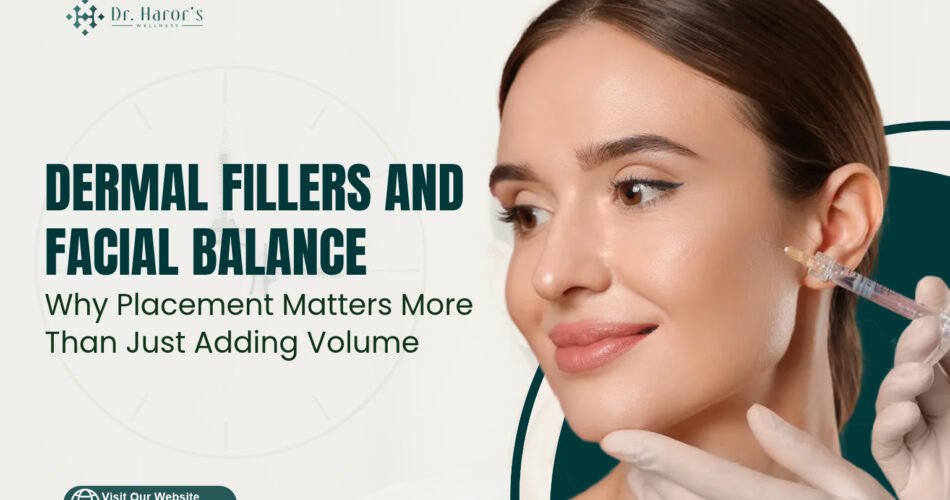
Well-defined jawlines, fuller cheeks, and naturally plump lips are often associated with youthful facial features. With growing age, our bodies begin to lose some of the glow and vibrancy they used to have. This is because our bodies produce less collagen and elastin, two primary proteins that maintain skin firmness and its ability to return to its original shape when stretched. Advanced skin treatments such as dermal filler treatment in Delhi can effectively replenish skin volume and elasticity. However, achieving a balanced appearance is more than simply adding volume. The placement, quantity, and type of filler play an important role in determining the final results. If you’re considering dermal filler treatment in Delhi, understanding how fillers work and why proper placement matters can help you make an informed decision.
Why Placement Matters More Than Volume?
A syringe of dermal fillers behaves differently depending on exactly where it’s injected. A small amount injected at the right depth, in the right tissue pocket, can restore the skin’s natural contour. Also, the same amount, if it goes off-target, can create an unnatural bulge or asymmetry that reads as “worked on.” That’s why it’s important to consult a qualified skin specialist with a strong understanding of facial anatomy. Two people receiving the same volume of fillers can have different outcomes. The result depends entirely on where the filler is injected. Think of a dermal filler treatment in Delhi like creating a sculpture. The aim should be to restore the face’s natural shape, shadows, and highlights rather than create an entirely new look. The results of a good filler depend more on the injector’s technique and placement than on how much filler is used.
Common Areas That Can Become Overfilled and How to Avoid It
Many aesthetic clinics offering dermal filler treatment in Delhi aim to add volume, making some facial areas likely to receive too much filler, which can unbalance facial structure and look obvious:
- Lips: Excessive filler can distort your lip shape or make them look unnatural. Precise placement will help enhance the natural lip line and balance.
- Cheeks: If too much filler goes in the wrong place, it may make your cheeks look too round or puffed.
- Under-Eyes: Adding too much filler can cause puffiness and swelling rather than improving hollow areas. This is a critical area that requires evaluation and precise placement.
- Nasolabial Folds: These lines run from the sides of the nose to the corners of the mouth. Filling them directly without addressing volume loss in the surrounding areas can sometimes make the face look heavier.
Conclusion
Dermal fillers are not just about adding maximum volume or changing every facial feature. The aim is to improve your existing facial structure without unbalancing your facial proportions or expression. If you’re looking for a dermal filler treatment in Delhi, book your consultation with Dr. Haror’s Wellness. Their team of best skin specialists in Delhi NCR has a strong understanding of facial anatomy and filler placement to help you achieve the best results.
FAQs
- Why is filler placement more important than the amount used?
Proper placement helps maintain natural facial proportions, while excessive or poorly placed filler can make facial features look puffy or uneven.
- Which facial areas are most commonly overfilled with dermal fillers?
The lips, cheeks, under-eye area, and nasolabial folds are commonly overfilled when filler placement and quantity are not carefully planned.