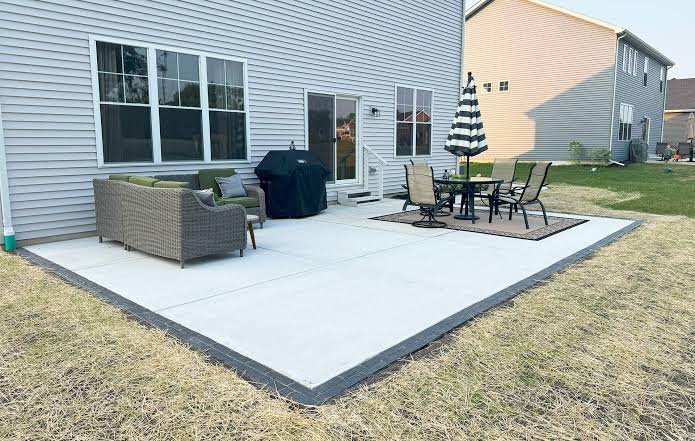
A do it yourself concrete patio can be a practical way for homeowners to create an outdoor living area for seating, dining, entertaining, or relaxing. Unlike loose gravel or temporary outdoor surfaces, a properly installed concrete patio provides a solid and permanent surface that can be customized with different finishes and designs. The process requires careful planning because concrete becomes difficult to modify once it has been poured and begins setting. A successful do it yourself concrete patio usually starts with measuring the space, checking the slope, preparing the ground, creating a stable gravel base, building forms, placing reinforcement when appropriate, pouring the concrete, finishing the surface, and allowing it to cure properly.
Why Should You Plan the Patio Before Starting?
Planning is one of the most important parts of a do it yourself concrete patio because mistakes made before pouring concrete can become difficult and expensive to correct afterward. Homeowners should first decide the patio’s dimensions, shape, location, drainage direction, and relationship to the house or other structures. The planned space should also provide enough room for furniture and normal movement. It is useful to mark the proposed patio with stakes and string or another temporary layout method so the dimensions can be viewed before excavation begins. Checking the slope is also important because the finished patio should allow rainwater to move away from structures instead of creating standing water near the house.
How Do You Choose the Right Location?
Choosing the location carefully can make a major difference in the success of a do it yourself concrete patio. Homeowners should consider sunlight, shade, access from the house, existing landscaping, drainage, trees, utility lines, and the overall layout of the backyard. A patio placed too close to a low drainage area may experience water problems, while a patio installed beneath large trees may eventually be affected by roots or falling debris. The location should also provide a practical connection to the home and enough clearance for construction equipment and concrete delivery if a large quantity of concrete is required. Before excavation, homeowners should identify potential underground utilities and follow applicable local requirements for the property.
How Should You Prepare the Ground for a Concrete Patio?
Ground preparation is a major stage of a do it yourself concrete patio because the concrete needs a stable foundation underneath it. The first step generally involves marking the project area and removing grass, roots, organic material, and unsuitable soil. The excavation depth depends on the planned concrete thickness, base material, site conditions, and local requirements. The ground should be shaped consistently so the finished patio has the intended slope. QUIKRETE recommends excavating the patio area and installing a compactable gravel subbase before the concrete is placed. Removing organic material is particularly important because soil containing roots or decomposing vegetation can shift over time and create an unstable foundation beneath the slab.
Why Does a Gravel Base Matter?
A compacted gravel base provides important support underneath a do it yourself concrete patio and can also help with drainage. Pouring concrete directly over loose soil can create problems if the ground settles unevenly or retains excessive moisture. A properly prepared gravel layer creates a more uniform foundation and helps distribute loads across the soil. QUIKRETE’s patio instructions describe using compactable gravel as a subbase and recommend compacting it before concrete placement. The exact depth should be selected according to the site, soil, climate, intended use, and applicable construction requirements rather than assuming one measurement works for every project. Thorough compaction is important because loose gravel can settle after the concrete has been installed.
How Do You Build Forms for a Concrete Patio?
Forms create the boundaries of a do it yourself concrete patio and help determine the shape, dimensions, and finished height of the slab. Common patio forms can be constructed from straight lumber that is secured with stakes and screws. The boards need to remain stable during the concrete pour because movement can change the final shape or thickness of the slab. Homeowners should use a level and measuring tools to check that the forms are positioned correctly and have the intended slope. When a patio meets a house foundation or another permanent structure, an isolation or expansion joint may be appropriate so the two structures can move independently. Properly installed forms make the pouring and leveling stages much easier.
Should a Concrete Patio Have Reinforcement?
Reinforcement can be an important consideration when constructing a do it yourself concrete patio, although the appropriate reinforcement depends on the project’s design and requirements. Some patios may use wire reinforcement or rebar, while certain fiber-reinforced concrete mixes can reduce or eliminate the need for traditional wire mesh according to the product instructions. Reinforcement should be positioned correctly rather than simply placed on the ground beneath the concrete. Homeowners should also consider the patio’s size, expected loads, soil conditions, climate, and local construction requirements before choosing a reinforcement method. For larger or structurally complicated slabs, professional advice can be useful because reinforcement requirements can be more involved than they appear in a basic DIY project.
How Do You Mix Concrete for a DIY Patio?
Mixing concrete correctly is one of the most important parts of a do it yourself concrete patio because the final strength and workability depend on following the concrete manufacturer’s instructions. The amount of water should be controlled rather than added randomly because excessive water can affect the finished concrete. For a small project, homeowners may mix bags in a wheelbarrow or mixing container, while a larger patio may require a mechanical mixer or ready-mix concrete delivery. The amount of concrete required should be calculated before work begins so the project does not run short during the pour. For larger patios, having enough people and equipment ready is particularly important because concrete placement needs to proceed efficiently before the material begins setting.
How Do You Pour a Concrete Patio?
Pouring is a major stage of a do it yourself concrete patio because the concrete needs to be distributed evenly throughout the forms before finishing begins. Concrete should be placed carefully and worked into corners and edges to reduce voids and air pockets. Once enough material is in the forms, a straight board or screed can be moved across the surface in a sawing motion to bring the concrete to the correct level and remove excess material. Working systematically helps prevent low areas and inconsistent thickness. For larger patios, it is particularly important to have the necessary labor and tools ready before the pour begins. The concrete should be placed according to the manufacturer’s instructions and the planned slab design.
How Do You Level and Finish the Patio Surface?
After pouring, a do it yourself concrete patio needs to be leveled and finished while the concrete is still workable. Screeding removes excess concrete and creates an even surface, while floating can help smooth the slab and close the surface appropriately. Homeowners can choose from several finishing options depending on the desired appearance, including a broom finish that can provide texture and slip resistance. The timing of each finishing step matters because concrete changes consistency as it begins to set. Working too early or too aggressively can affect the surface, while waiting too long can make finishing difficult. Manufacturer instructions should be followed carefully for the specific concrete product being used.
Why Are Control Joints Important in a Concrete Patio?
Control joints are an important consideration for a do it yourself concrete patio because concrete naturally changes volume as temperature and moisture conditions change. Properly planned joints create intentional locations where cracking can occur rather than allowing cracks to develop randomly across the slab. Larger patios especially need a thoughtful joint layout. QUIKRETE’s patio guidance specifically recommends cutting control joints in larger patios and provides joint placement recommendations as part of the patio construction process. The joint layout should divide the slab into reasonably sized sections and account for the patio’s shape and dimensions. Homeowners should plan joint locations before pouring so the finishing tools and guides are ready when the concrete reaches the appropriate stage.
How Should a Concrete Patio Be Sloped for Drainage?
Drainage should never be overlooked when building a do it yourself concrete patio because water needs a path away from the house and other structures. A patio that is perfectly flat without considering runoff can allow rainwater to remain on the surface or collect against the foundation. The appropriate slope depends on the site and applicable construction requirements, but the important principle is that water should move toward a suitable drainage area. QUIKRETE recommends setting patio and sidewalk forms with an even slope away from structures for rain runoff. Homeowners should check the proposed slope with a level and measuring tools before pouring because correcting drainage after the concrete has hardened can be extremely difficult.
Can a DIY Concrete Patio Be Decorative?
A do it yourself concrete patio does not have to look like a plain gray slab. Homeowners can create different visual effects through surface finishing, coloring, exposed aggregate, staining, or other decorative techniques. The final design should be selected before the concrete is poured because some decorative treatments require specific timing and preparation. A broomed texture can provide a simple appearance, while decorative techniques can make the patio resemble other outdoor materials. Concrete can also serve as a base for certain additional patio finishes when the project is designed appropriately. Planning the desired appearance early allows the homeowner to choose the right concrete product and finishing tools rather than trying to change the surface after it has cured.
How Do You Cure a DIY Concrete Patio?
Curing is one of the most important steps after completing a do it yourself concrete patio because freshly placed concrete needs appropriate moisture and environmental conditions while it develops its properties. Curing should begin according to the concrete product’s instructions once the surface has reached the appropriate finishing stage. QUIKRETE recommends water curing freshly placed concrete for a minimum of several days for certain projects and also describes cure-and-seal products as an alternative method when appropriate. Homeowners should avoid treating curing as simply waiting for the surface to look dry. Concrete can appear hard while it is still developing internally. Following the manufacturer’s curing instructions can help support better long-term performance.
What Tools Do You Need for a DIY Concrete Patio?
A do it yourself concrete patio requires more than a shovel and a bag of concrete. Depending on the size and design, homeowners may need measuring tape, stakes, mason’s string, a level, shovel, wheelbarrow or concrete mixer, lumber for forms, screws, a tamper or compaction equipment, screed board, float, finishing trowel, grooving tool, and protective equipment. Safety glasses and waterproof gloves are especially important when working with cement-based products. Larger patios may require additional people and professional-grade equipment because moving and finishing a large amount of concrete quickly can be physically demanding. Preparing all tools before the concrete arrives can help prevent delays during the most time-sensitive stages of the project.
How Much Concrete Do You Need for a Patio?
Calculating the amount of concrete is an essential part of planning a do it yourself concrete patio because ordering too little can create a difficult interruption during the pour. Homeowners should calculate the patio’s length, width, and planned thickness to determine the approximate volume of concrete required, then account for the specific estimating method used by the concrete supplier or bagged product manufacturer. The project should be measured carefully, especially when the patio has irregular corners or different elevations. For larger patios, ready-mix delivery may be more practical than mixing hundreds of individual bags. Having the correct amount available before the pour helps maintain a consistent installation and reduces the risk of creating cold joints caused by long delays between sections.
What Common Mistakes Should DIY Patio Builders Avoid?
There are several common mistakes that can reduce the quality of a do it yourself concrete patio. Pouring over poorly prepared soil, failing to compact the gravel base, ignoring drainage, building unstable forms, adding excessive water to the concrete, rushing the finishing process, and skipping control joints can all create avoidable problems. Another mistake is underestimating the amount of labor required for a large slab. Concrete work is time-sensitive, and once a large quantity is mixed and delivered, there may be limited time to spread, level, finish, and joint the surface. Careful preparation before the pour is therefore one of the best ways to reduce mistakes and improve the chances of achieving a consistent finished patio.
Is a DIY Concrete Patio Suitable for Every Homeowner?
A do it yourself concrete patio can be manageable for homeowners who have the necessary tools, time, physical ability, and confidence to handle excavation, form construction, concrete mixing, pouring, and finishing. However, larger patios can become challenging because concrete placement is physically demanding and time-sensitive. Difficult slopes, poor soil, complicated drainage, access limitations, structural connections, or extensive reinforcement can also make a project more complicated. Homeowners should realistically assess the size and complexity of the work before deciding whether to complete it themselves. If the patio is large or involves significant grading or drainage work, consulting a qualified professional before starting can help identify issues that may not be obvious from the surface.
How Can You Maintain a Concrete Patio After Installation?
Once a do it yourself concrete patio has cured properly, regular maintenance can help preserve its appearance and usability. Homeowners should keep the surface reasonably clean and watch for cracks, spalling, drainage problems, or areas where water repeatedly collects. Outdoor furniture should be positioned carefully, and harsh chemicals should not be used unless they are appropriate for the concrete surface. In colder climates, homeowners should also consider how deicing products and repeated freeze-thaw conditions may affect exterior concrete. Addressing small problems early can be easier than waiting until deterioration spreads. A suitable sealer may also be considered when recommended for the particular concrete and finish, but it should be applied according to the manufacturer’s instructions.
When Should You Hire a Professional Instead?
Although a do it yourself concrete patio can be suitable for certain projects, professional help may be a better option when the patio is very large, the property has difficult soil or drainage conditions, or the project connects to structural elements of the home. Professional contractors have equipment and experience for excavation, grading, concrete placement, reinforcement, finishing, and drainage work. A poorly installed slab can be difficult to remove and replace, so homeowners should consider the long-term consequences before taking on a complicated project. For a small, straightforward patio, DIY construction may be realistic, but larger or technically demanding projects deserve careful evaluation before work begins.
How Can a Concrete Patio Improve Your Outdoor Space?
A properly planned do it yourself concrete patio can create a durable outdoor area that gives homeowners more usable space for furniture, meals, gatherings, and relaxation. Concrete also provides flexibility in terms of shape, texture, color, and decorative finish, allowing the patio to complement the surrounding landscape and home. The most important part is not simply getting the concrete onto the ground but creating a stable base, controlling drainage, maintaining the correct form dimensions, finishing the surface at the right time, and allowing the material to cure properly. For homeowners in West Babylon, Long Island, New York, and surrounding communities, a professionally planned patio can provide a practical addition to an outdoor living area. Promaster Maintenance Corp Paving and Masonry can help homeowners with concrete, paving, masonry, and exterior improvement solutions designed around the specific needs of their property.