Introduction
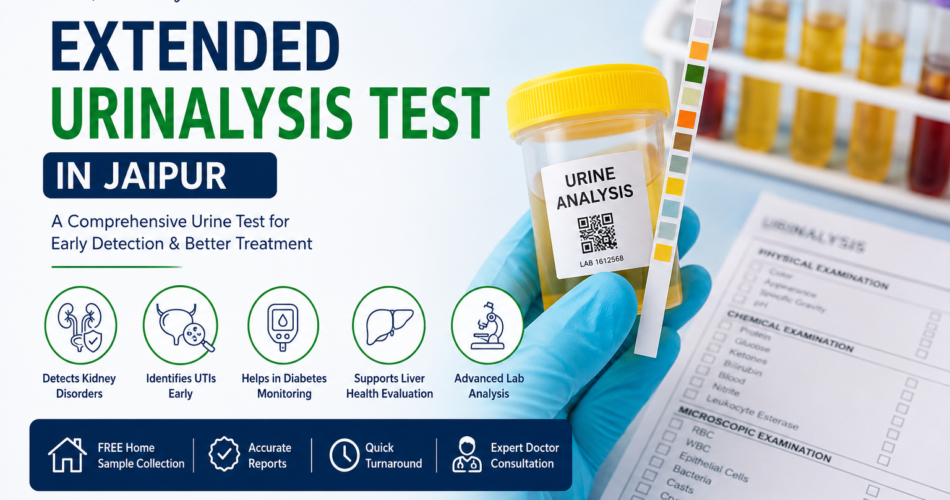
Urine analysis is a useful diagnostic tool for evaluating urinary tract and kidney health. While a routine urine examination checks common physical, chemical and microscopic findings, an extended urinalysis test in Jaipur can provide a broader assessment through additional parameters.
RDC Care currently lists its Extended Urinalysis Test (EURINE) as a 21-parameter test. The panel includes measurements such as protein, glucose, blood, leukocytes, red blood cells, crystals, casts and yeast cells.
This makes extended urinalysis useful when a healthcare professional needs more detailed information about urinary abnormalities.
What Is an Extended Urinalysis Test?
An extended urinalysis is a comprehensive examination of a urine sample. It evaluates physical, chemical and microscopic characteristics that can provide clues about urinary and renal health.
Compared with a basic urine examination, an extended panel can offer additional information about:
- Urine concentration
- Acidity or pH
- Protein
- Glucose
- Ketones
- Blood
- White blood cells
- Red blood cells
- Crystals
- Casts
- Yeast cells
- Other microscopic findings
RDC Care’s current EURINE panel contains 21 parameters.
What Is Included in the RDC Care Extended Urinalysis Test?
The current RDC Care listing includes the following 21 parameters:
- Appearance
- Colour
- Specific Gravity
- pH
- Glucose
- Ketone
- Protein
- Bilirubin
- Urobilinogen
- Blood (Hemoglobin)
- Nitrites
- Ascorbic Acid
- Leucocytes
- Red Blood Cells
- White Blood Cells (Pus Cells)
- Epithelial Cells
- Crystals
- Casts
- Yeast Cells
- Spermatozoa
- Other
This combination provides a broader urine assessment than a single urine marker.
Why Is Extended Urinalysis Important?
Urine abnormalities can sometimes provide an early indication that further medical evaluation may be useful.
A healthcare professional may recommend an extended urine examination when investigating:
- Recurrent urinary tract infections
- Blood in urine
- Protein in urine
- Suspected kidney problems
- Changes in urine appearance
- Urinary symptoms
- Possible kidney inflammation
- Certain metabolic abnormalities
RDC Care specifically describes its extended panel as useful when evaluating conditions such as suspected glomerulonephritis, nephrotic syndrome, recurrent UTIs, haematuria and proteinuria.
However, an abnormal urine result does not automatically confirm a disease. Results should be evaluated alongside symptoms, medical history and other investigations.
Understanding the Main Urinalysis Parameters
Appearance and Colour
The physical appearance and colour of urine can provide basic information about the sample.
Changes can occur because of hydration, diet, medications, infections and other factors.
Specific Gravity
Specific gravity provides information about the concentration of urine.
It can be influenced by hydration status and the kidneys’ ability to concentrate urine.
pH
Urine pH indicates how acidic or alkaline the sample is. Diet, medications and certain medical conditions can influence urine pH.
Protein
Protein in urine, particularly when persistent, may require further evaluation because it can sometimes be associated with kidney problems.
Glucose
Glucose in urine can occur when blood glucose levels are elevated beyond the kidneys’ usual reabsorption capacity, although other factors can also contribute.
Ketones
Ketones may appear in urine under circumstances such as prolonged fasting, certain dietary patterns or uncontrolled diabetes.
Blood and Red Blood Cells
Blood or red blood cells in urine may occur for several reasons, including urinary tract conditions, stones, infection or other causes. Further evaluation may be needed if the finding persists.
Leukocytes and White Blood Cells
Leukocytes or white blood cells may be relevant when evaluating urinary inflammation or infection.
Nitrites
Nitrites can be useful when assessing for certain bacterial urinary tract infections, although a negative result does not completely rule out infection.
Crystals
Urinary crystals can occur for different reasons. Some types may be associated with conditions that contribute to urinary stone formation.
Casts
Urinary casts are formed in the kidney’s tubules. Different types of casts can provide useful information when evaluating kidney-related conditions.
When Should You Consider an Extended Urinalysis Test?
A doctor may recommend urine testing when symptoms or previous results suggest that urinary or kidney health needs evaluation.
Possible reasons include:
- Burning or discomfort while urinating
- Frequent urination
- Blood in urine
- Unusual urine appearance
- Recurrent urinary infections
- Persistent urinary symptoms
- Protein detected in a previous test
- Suspected kidney problems
- Follow-up of an existing condition
The appropriate urine test depends on the individual’s symptoms and medical history.
Extended Urinalysis vs Routine Urine Examination
Both tests analyze urine, but the scope can differ.
Routine Urine Examination
A routine urine test generally evaluates common physical, chemical and microscopic findings.
Extended Urinalysis
An extended panel provides a broader set of measurements. RDC Care’s EURINE panel includes 21 parameters, including crystals, casts, yeast cells, ascorbic acid and other microscopic findings.
If a doctor needs a more detailed evaluation, an extended panel may be considered.
How Is an Extended Urinalysis Test Performed?
Unlike blood tests, an extended urinalysis requires a urine sample.
The general process includes:
- A sterile sample container is provided.
- The urine sample is collected according to laboratory instructions.
- The sample is submitted for testing.
- Physical, chemical and microscopic parameters are analyzed.
- The laboratory prepares the report.
- A healthcare professional can interpret the findings when required.
Proper sample collection is important because contamination can affect some urine-test results.
How Should a Urine Sample Be Collected?
For many urine examinations, a clean midstream urine sample is preferred.
General steps include:
- Wash your hands before collection.
- Use the sterile container supplied by the laboratory.
- Start urinating.
- Collect the midstream portion in the container.
- Avoid touching the inside of the container.
- Close the container securely.
- Submit the sample according to laboratory instructions.
RDC Care’s urine-testing information also advises collecting the midstream portion in a sealed, sterile container.
Is Fasting Required for Extended Urinalysis?
The current RDC Care listing shows “Fasting Time: Free” for its Extended Urinalysis Test, meaning fasting is not listed as a requirement.
If you’re undergoing additional blood tests at the same time, those tests may have separate preparation requirements. Follow the instructions given by your healthcare professional or laboratory.
Extended Urinalysis Test Price in Jaipur
The price of a diagnostic test can vary depending on the laboratory, panel and current offers.
RDC Care’s current listing for the 21-parameter Extended Urinalysis Test shows an offer price of ₹212, against a listed price of ₹250.
Because diagnostic prices and promotional offers may change, it is best to verify the current price before booking.
Home Sample Collection in Jaipur
Home sample collection can make diagnostic testing more convenient, particularly for people who have difficulty travelling to a diagnostic centre.
RDC Care states that its testing process includes home or office sample collection by phlebotomists, followed by laboratory processing and report support.
Potential advantages include:
- Convenient sample collection
- Less travel
- Useful for elderly individuals
- Easier follow-up testing
- Professional collection support
Availability may depend on the patient’s location and appointment schedule.
Can Extended Urinalysis Detect Kidney Problems?
Extended urinalysis can provide useful clues when kidney problems are being evaluated.
Findings such as:
- Protein
- Blood
- Red blood cells
- White blood cells
- Casts
- Certain crystals
may provide information that helps a healthcare professional decide whether additional kidney investigations are necessary.
However, urinalysis alone cannot diagnose every kidney disorder. Additional blood tests, imaging or specialized urine tests may be recommended depending on the findings.
Can an Extended Urinalysis Detect UTI?
Some urine findings can support the evaluation of a possible urinary tract infection.
Parameters such as:
- Leukocytes
- White blood cells
- Nitrites
- Blood
may be relevant.
However, a urine routine/extended examination is not the same as a urine culture. If a bacterial infection is suspected, a healthcare professional may recommend a culture to identify the organism and guide treatment.
How to Choose an Extended Urinalysis Test in Jaipur
When searching for an extended urinalysis test in Jaipur, consider these factors:
1. Check the Parameters
Make sure you know exactly which markers are included in the panel.
2. Follow Collection Instructions
Correct urine collection can help reduce contamination and improve the usefulness of the report.
3. Check Home Collection
If you prefer testing at home, confirm availability for your location.
4. Check Current Pricing
Diagnostic prices and promotional offers can change.
5. Consider Medical Guidance
If your report contains abnormal findings, discuss them with a qualified healthcare professional rather than self-diagnosing.
Frequently Asked Questions
What is an extended urinalysis test?
It is a comprehensive urine examination that evaluates physical, chemical and microscopic parameters to provide broader information about urinary health.
How many parameters are included in RDC Care’s Extended Urinalysis Test?
RDC Care currently lists 21 parameters in its EURINE panel.
What is the price of an extended urinalysis test in Jaipur?
RDC Care’s current listing shows an offer price of ₹212, compared with a listed price of ₹250. Verify the current price before booking.
Is fasting required for extended urinalysis?
No fasting is currently listed as a requirement for RDC Care’s EURINE test.
Can I get an extended urinalysis test at home in Jaipur?
RDC Care states that home or office sample collection is available through phlebotomists.
What type of sample is required?
The test requires a urine sample. A properly collected midstream sample is commonly used for urine testing.
Does an abnormal urine test mean I have kidney disease?
Not necessarily. Abnormal findings can have several causes and should be interpreted in the context of symptoms, medical history and other investigations.
Is extended urinalysis the same as a urine culture?
No. Extended urinalysis examines multiple physical, chemical and microscopic characteristics. A urine culture is a separate test used to identify microorganisms that may cause urinary infection.
Final Thoughts
An extended urine examination can provide valuable information when urinary tract or kidney-related abnormalities need further evaluation. By examining 21 different parameters, RDC Care’s Extended Urinalysis Test provides a broader assessment than a basic urine examination.
If you’re searching for an extended urinalysis test in Jaipur, you can explore the RDC Care test page below for current availability, pricing and booking information.