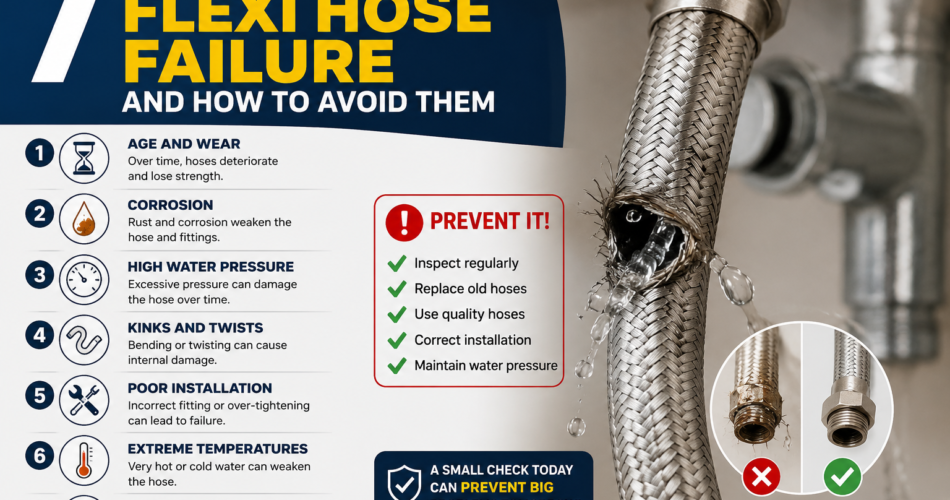
7 Common Causes of Flexi Hose Failure and How to Avoid Them
A flexi hose failure rarely happens without warning — it just often happens without anyone watching closely enough to notice. These small braided connectors handle constant water pressure behind washing machines, dishwashers, toilets, and water heaters, and when they give way, the result is usually a fast-moving leak rather than a slow drip. The good news is that most causes of flexi hose failure are well understood, predictable, and — importantly — preventable with the right habits.
Here are seven of the most common causes, along with practical steps to avoid each one.
1. Old Age and Natural Wear
Every flexi hose has a working lifespan, typically 8 to 10 years, after which the inner rubber or PVC liner starts to lose flexibility and strength even if the outer braid still looks fine. This mismatch — a hose that looks okay but isn’t — is one of the main reasons flexi hose problems catch homeowners off guard.
How to avoid it: Keep a simple record of installation dates for every hose in your home. When a hose approaches the 8-10 year mark, replace it proactively rather than waiting for visible damage. This is especially important for hoses that run constantly in the background, like those feeding a water heater.
2. Excessive Water Pressure
Homes with unusually high municipal water pressure place ongoing stress on every hose and fitting in the system. Over time, this constant pressure accelerates wear on the inner liner and can cause fittings to loosen or crack well before a hose’s expected lifespan is up.
How to avoid it: Have your home’s water pressure tested. If it consistently reads above 80 psi, installing a pressure-reducing valve protects not just your flexi hoses but your entire plumbing system, including fixtures and appliances.
3. Low-Quality Hoses or Fittings
Not every flexi hose on the market is built to the same standard. Budget hoses often use thinner liners or lower-grade metal fittings that corrode and weaken faster. When a cheap hose fails, it’s frequently a case of the materials simply not being rated for long-term, everyday use.
How to avoid it: Choose hoses with a solid reputation and clear pressure ratings, ideally with a braided stainless-steel exterior and a reinforced inner core. Spending slightly more upfront on a quality hose is far cheaper than dealing with water damage later.
4. Corrosion at the Connection Points
The metal fittings on a flexi hose are usually plated to resist rust, but that plating wears away over years, particularly in damp, poorly ventilated spaces like under a kitchen sink or in an enclosed laundry area. Once corrosion reaches bare metal, the fitting becomes structurally weaker and more prone to sudden cracking, which is a common trigger for flexi hose leaks.
How to avoid it: Improve ventilation where possible in enclosed spaces like laundry cupboards, and inspect fittings periodically for rust or discoloration. Wipe away moisture buildup around connections when you spot it, since standing dampness speeds up corrosion.
5. Vibration From Connected Appliances
Washing machines in particular generate significant vibration during spin cycles, and that movement transfers directly into the hose and its fittings with every load. Repeated vibration over hundreds of cycles gradually loosens connections and fatigues the metal braid, making this one of the more mechanical, often-overlooked causes of flexi hose failure.
How to avoid it: Check that your washing machine sits level and stable, since an unbalanced machine vibrates more aggressively. Periodically confirm hose fittings are still hand-tight plus a modest turn, and avoid letting the hose rest against sharp edges or corners where movement could cause abrasion.
6. Water Hammer and Pressure Spikes
Water hammer — the banging or shuddering noise that occurs when a valve closes abruptly, such as a washing machine’s solenoid valve shutting off mid-cycle — creates a brief but intense pressure spike, often well above normal operating levels. Repeated water hammer events place sudden stress on hoses that steady pressure alone wouldn’t cause, and this cumulative stress is a frequent contributor to unexpected flexi hose failure.
How to avoid it: If you regularly notice banging pipes when appliances shut off, consider having a plumber install water hammer arrestors. These absorb the pressure spike before it reaches your hoses and fittings.
7. Lack of Routine Inspection
Perhaps the most common cause of all isn’t mechanical or material — it’s neglect. Flexi hoses are typically installed once, tucked behind an appliance or cabinet, and never looked at again. Left unchecked, even a minor early-stage issue like a small bulge or slight fitting corrosion has years to quietly develop into a serious leak.
How to avoid it: Build a simple habit of checking all flexi hoses in your home every 3 to 6 months. Look for rust, bulging, cracks in the braiding, dampness, or unusual residue near fittings. It takes only a few minutes and is the single most effective way to catch flexi hose problems before they escalate.
Putting It All Together
Most causes of flexi hose failure share a common thread: they develop gradually and give warning signs before an actual rupture. A hose doesn’t typically go from perfectly fine to burst overnight — it moves through stages of wear that are visible if you know where and how to look. For homeowners who want a closer, more detailed look at those early indicators, this comprehensive guide on flexi hose failure warning signs breaks down exactly what to check for and when.
Final Thoughts
Flexi hose failure is almost always the result of identifiable, preventable causes — age, pressure, poor quality materials, corrosion, vibration, water hammer, and simple lack of inspection. None of these require professional-level expertise to manage. A quality hose, sensible pressure levels, and a recurring habit of checking connections every few months go a long way toward preventing flexi hose leaks and the costly water damage that often follows them.