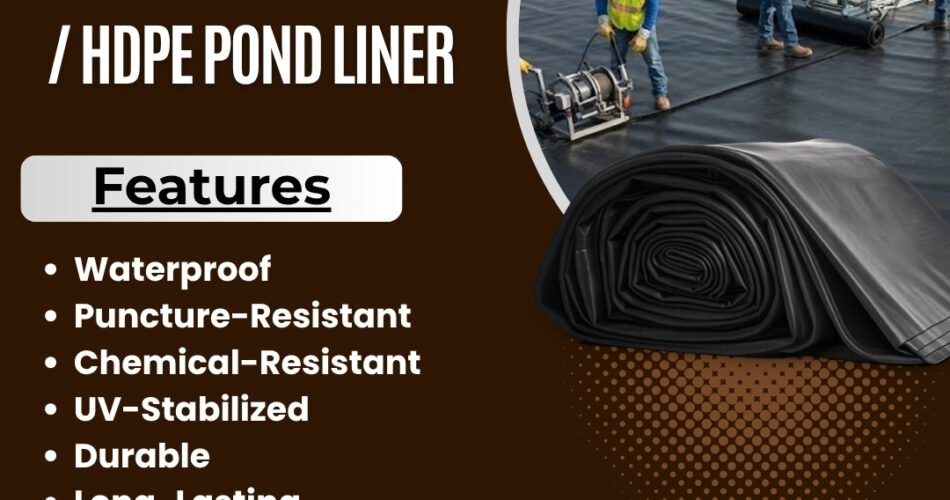
In n HDPE Pond Liner, there is a waterproof material which acts as a shield for keeping the water inside the structure and preventing leakage of water into the soil present outside the pond. The material used in this liner is high density polyethylene. These liners are common in agricultural ponds, fish farms, irrigation systems, water storage facilities, and other containment applications. Water conservation has gained importance especially in places where there is minimal rainfall and proper management of the groundwater should be carried out. The installation of an appropriate liner aids in water conservation by minimizing water seepage. It forms a barrier between the stored water and the soil beneath. Why is this important? A good pond can leak a lot of water into the soil if the soil is very permeable. An HDPE Pond Liner Manufacturer concentrates on making sheets that have the right characteristics including strength, flexibility, and resistance to the environment.
Unique Properties of HDPE Pond Liners
HDPE Pond Liners have some unique properties, which make them ideal for tough water storage applications. They have low permeability characteristics, which ensure that water does not penetrate the liner. Additionally, they have good tensile strength and puncture resistance properties when manufactured in accordance with correct specifications. It has good chemical resistance properties and is ideal for applications where the water contains certain dissolved materials or is in contact with treated waste water. UV resistance is another notable property of HDPE Pond Liners especially in cases where part of the liner is exposed to sunlight. They come in various thicknesses and roll sizes and allow customers to choose according to the size of the pond.
Major Advantages in Agriculture and Water Management
An important advantage of using an HDPE Pond Liner is minimizing water loss due to seepage. This is particularly important for farmers, whose farms rely on stored water in ponds for irrigation during dry seasons. Lining the ponds will ensure better conservation of water. They are also widely applied in fisheries and other aquaculture ventures, in which case water management becomes essential. Separating the water of the pond from the surrounding soil helps limit contact with undesirable elements in the soil.
Applications for Different Sectors
HDPE Pond Liners have multiple applications in various industries owing to the effectiveness of their containment qualities. In the agricultural sector, they are used in the construction of farm ponds and irrigation reservoirs to collect rainwater that will then be used for watering the crops. In the fish farming and aquaculture industry, liners are used in making artificial ponds and reducing the amount of seepage. In rural water resource management, they can be used to preserve water for other activities such as watering of livestock and other purposes.
Critical Criteria for Selecting Appropriate Liner
The choice of appropriate HDPE Pond Liner needs some important criteria to be considered while selecting the liner. One of the first factors to keep in mind is the thickness of the liner since it is related to the liner strength and applicability. Other critical factors include tensile strength, elongation, puncture resistance, tear resistance, and UV stability. In the case of industrial ponds, the chemical resistance needs to be checked depending on the nature of chemicals that might contact the liner. The buyer can find roll width and roll length information which will help him during installation of the liner and minimize unnecessary seams. In addition, it is useful to request technical data sheets, quality testing reports, and relevant product information before ordering the liner. An experienced HDPE Pond Liner Manufacturer can tell about various grades and thicknesses of liners.
Installation and Maintenance for Optimal Long-Term Performance
Installation of the HDPE Pond Liner requires great care to ensure that it performs optimally during its lifetime. Firstly, there is a need to prepare the ground upon which the liner will be placed. This will involve removal of any sharp stones, roots, debris, or any other object that might pierce through the lining sheet. The ground needs to be properly compacted depending on the form of the pond. If needed, there is a possibility of installing geotextile beneath the sheet to protect it from any harm. Lining sheets must be laid with adequate material for slopes, overlaps, and trenching.
How to Choose a Reliable Business Partner for High Consistency in Product Quality
Choosing a reliable business partner plays an important role in buying the HDPE Pond Liner. The buyers should analyze material quality, thickness range, dimensions of products, production capacity, and consistency of batches. Clear technical data will help customers choose the appropriate liner for their project. Also, buyers should discuss volume of orders, packaging, shipment and delivery terms prior to placing orders. A reliable HDPE Pond Liner Supplier must have experience in various projects and offer the most appropriate products. Mahira Polyglobal LLP is an Indian company which offers HDPE Pond Liner products for agricultural ponds, water storage, aquaculture and industrial use. The buyers should pay attention to the following parameters: tensile strength, elongation, puncture resistance, UV resistance, chemical resistance, manufacturing capacity, consistency. A good business partner will make the procurement process easy and will assist in the technical details of the project.
Conclusion
The HDPE Pond Liners serve as an ideal means of controlling water seepage as well as storing water in various agricultural, commercial, and industrial activities. With low permeability, strength, resistance to chemicals, and UV protection, the HDPE Pond Liners are suitable for various applications of containment purposes. Nonetheless, buyers need to ensure that they have chosen the right thickness and specifications for effectiveness. It is equally crucial to take into account other factors like soil preparation, proper installation, seam welding, and maintenance. Selecting an HDPE Pond Liner Supplier who is reliable might play a significant role in helping select the right product for the project.
Frequently Asked Questions (FAQs)
1. What is the purpose of using HDPE as a pond liner?
This material prevents water leakage from agricultural, fish, irrigation ponds, water storage and some industrial ponds.
2. Which physical characteristics of HDPE make it useful as a liner for ponds?
The material is characterized by low permeability, high tensile strength, chemical resistance and even variants with UV resistance. Therefore, this material can be used for long-term water storage in case of appropriate installation.
3. What thickness is required for HDPE Pond Liner?
Depends on the depth of the pond, composition of the soil, way of installation, load, etc. The customer should study technical characteristics before choosing the thickness of the liner.
4. How long will an HDPE Pond Liner last?
The lifespan of the membrane will be determined by the quality of the material, thickness, ultraviolet protection, installation, and maintenance.
5. Who is the largest supplier of HDPE Pond Liner?
There are no proven global statistics which could verify that a particular company has emerged as the biggest provider of HDPE Pond Liners. Mahira Polyglobal LLP is one Indian company that offers HDPE Pond Liner products for usage in agricultural ponds, water storage tanks, aquaculture and industries. There are certain aspects which have to be considered by consumers while choosing a manufacturing source for HDPE Pond Liner products.