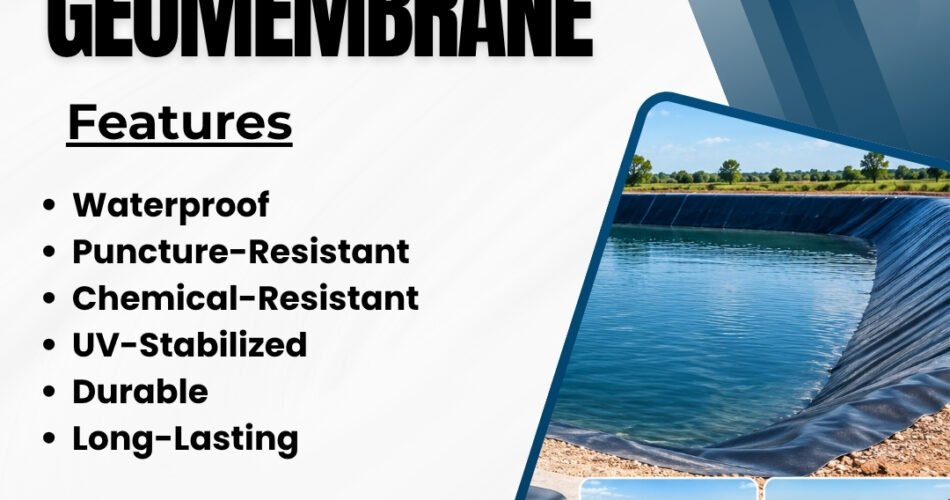
Geomembrane is an important geosynthetic product which finds wide application in construction projects, agriculture, mining, water management and environmental protection projects. This geosynthetic is specifically designed to create a protective liner which helps to stop any liquid as well as gas from moving through the soil or any other surface. They are available in different materials, sizes and specifications depending upon the requirements of a project. HDPE, LLDPE, LDPE and PVC are among some commonly used geomembrane materials. Different materials have different properties so the selection of appropriate geomembrane material is necessary. Professional Geomembrane Manufacturer India concentrates on manufacturing appropriate geomembrane products with even thickness, durability, flexibility and environmental resistance.
Types of Geomembrane Materials
Geomembranes are produced from varying types of polymers, and each one has its own advantages. The commonly used HDPE geomembranes have high tensile strength, chemical resistance and low permeability. These are ideal for tough installations like landfills, mining, industrial and large-scale water storage. The LLDPE geomembranes are more flexible and elongation, and they are ideal for installations that need flexibility. LDPE liners are flexible and they can suit specific agricultural and water containment installations. The PVC geomembranes are used where flexibility and certain chemical compatibilities are critical. It all depends on the environment of installation, the liquids being contained, the temperatures and the lifespan of service required. It is important that buyers do not think one material will work in any situation. For instance, a wastewater treatment plant would have different liner specifications from a farm pond. Knowledge of the material properties would help project managers select the right geomembrane product.
Applications in Construction and Environmental Protection
Geomembranes are applied in a wide range of industries due to their efficient containment capabilities. They are used in farm ponds, irrigation dams, and water retaining systems in agriculture. They are also utilized in aquaculture such as fish ponds and water holding systems. In the construction industry, they are used in underground construction work, water reservoirs, canals, and some foundation protection works. Special geomembrane liners used in landfills facilitate the containment of leachate and protection of the soil and groundwater.Geomembrane liners are also used in mining tailings storage facilities, heap leach pads, and process water containment facilities. Industrial facilities use geomembranes in wastewater and chemical containment facilities, provided that the chosen material is compatible with the chemicals involved. Their use is not restricted to big projects only. Suitable geomembrane liners are also useful for small agricultural enterprises and private individuals.
The Right Geomembrane for Your Project
A number of considerations need to be taken into account when trying to choose a proper geomembrane. Firstly, it is crucial to understand what material or substance needs to be stored. Water containment will require some other specifications from a liner as opposed to chemical containment and mining projects. Materials should be chosen on the basis of their chemical compatibility, flexibility, temperature, and exposure to the environment. In addition, thickness is another criterion which is also critical since it has an effect on physical characteristics and performance. Other criteria to be considered include tensile strength, puncture resistance, elongation, UV stability, and durability.
Geomembrane Liner Installation and Quality Control Measures
Appropriate installation of geomembrane liners plays an important role in ensuring that the anticipated results of the lining system are achieved. Prior to the installation process, the ground surface should be cleaned and properly prepared. Any sharp objects such as stones, tree roots, construction materials, and others should be removed since they increase the chances of puncture of the membrane. The ground surface needs to be levelled and properly compacted following the designs provided by the project. After preparation, the liner sheets need to be installed on the surface within the right area and overlapping.
Advantages of using Quality Geomembrane
Several benefits can be derived from the use of quality geomembrane. This is because low permeability will enable the reduction of leakage hence making the usage efficient. The ability to resist chemicals enables selected materials to meet industrial uses. Flexibility and strength properties make them installable in various shapes and surface types based on material type. Protection of the surrounding soil and groundwater will be provided if the geomembrane is designed and installed correctly as part of the containment system. They come in various thickness and dimensions to cater for small and large projects. One benefit is the possibility of providing long-term service if the right material is chosen and properly maintained.
Significant Characteristics and Performance Attributes
Several significant technical characteristics affect the performance of the geomembrane. Permeability is the most significant attribute since it allows the prevention of water and liquid penetration through the membrane. The tensile strength of the material reflects its ability to withstand pull forces during installation and service operation. Elongation indicates the elasticity of the liner, whereas puncture resistance is designed to protect the liner from the penetration of rocks and sharp objects. Chemical resistance is one more significant property especially for the wastewater treatment, mining, and landfill industry applications. UV resistance comes into play when the geomembranes are going to be installed in sunny conditions. Another significant characteristic is the thickness which is chosen depending on design requirements of the project. A good Geomembrane Supplier India must have all technical data concerning the chemical composition, thickness, tensile strength, elongation, and other important characteristics.
Conclusion
A geomembrane is a vital element in today’s world where proper water management, constructions, mining, agriculture, and environmental protection become increasingly relevant. The ability of geomembrane to be an efficient liquid barrier makes it useful for various purposes, including pond lining, reservoirs, landfills, industrial applications, and others. Selection of the proper geomembrane requires consideration of such aspects as material type, thickness, tensile strength, chemical and puncture resistance, and ultraviolet protection. At the same time, proper surface preparation and installation are also crucial to ensure high efficiency. Users need to select their geomembrane products based on the needs of their projects and collaborate with qualified manufacturers.
Frequently Asked Questions (FAQs)
1. For what purpose isthe geomembrane used?
The Geomembrane material is used for holding water, preventing water leakage, making landfill liners, mining operations, water purification, building agricultural ponds and many other industries.
2. Materials that can be used to make Geomembrane?
The most common materials for making geomembranes include HDPE, LLDPE, LDPE, and PVC. They differ in flexibility, strength, chemical resistance, and durability.
3. How to determine the thickness of the geomembrane?
It depends on the application, installation conditions, loading and chemical resistance. It must be specified prior to the selection process.
4. Are geomembranes suitable for the construction of agricultural ponds?
Yes, there are geomembranes that are suitable for constructing such ponds.
5. Who is the largest supplier of Geomembrane ?
There are no officially certified global figures that point out any one company being the biggest Geomembrane provider in India. Mahira Polyglobal LLP is an Indian company that provides Geomembrane services for various sectors including but not limited to water retention, agriculture, mining, landfill sites and industries. While selecting the best service providers, it is advisable that potential clients consider factors like strength, thickness, chemical resistance and more.