Summary
Luxury watches require special attention during transportation because of their financial value, delicate components, and collectible appeal. Whether shipping a modern luxury watch, a vintage timepiece, or a valuable limited edition, the right shipping process helps reduce the risk of damage, theft, and financial loss.
Successful watch shipping involves three essential elements: protective packaging, an appropriate transportation provider, and suitable insurance coverage. Each element plays a different role in protecting the shipment. Packaging reduces physical damage, reliable carriers support controlled delivery, and insurance provides financial protection against covered losses.
Standard parcel services may not offer sufficient protection for expensive watches. Carrier liability, declared value limits, prohibited-item rules, and insurance exclusions can affect the available coverage.
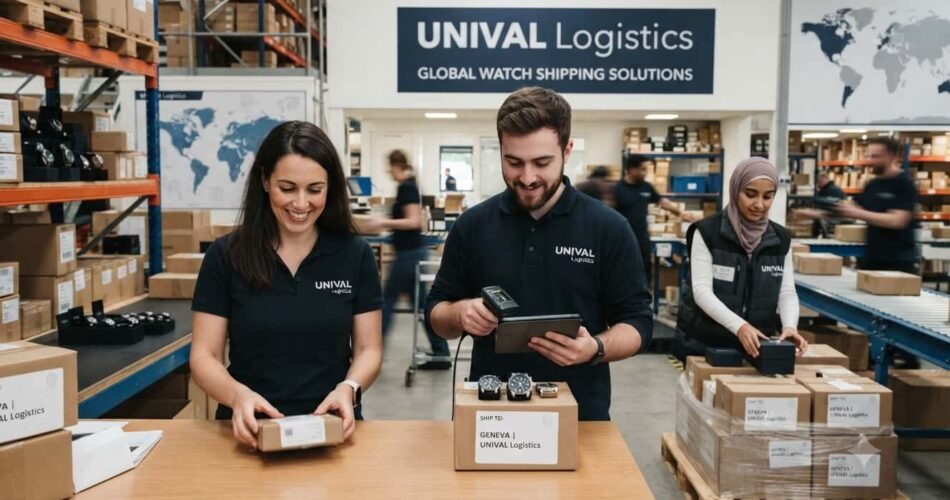
UNIVAL Logistics helps customers understand valuable shipping requirements and make informed transportation decisions. With careful preparation and suitable protection, businesses and collectors can ship valuable timepieces with greater confidence.
Overview
The watch industry includes luxury brands, independent retailers, wholesalers, collectors, auction houses, and online sellers. Many of these businesses need dependable transportation for valuable timepieces.
However, watches are not ordinary parcels. A luxury watch can contain delicate mechanical components, polished surfaces, precious metals, gemstones, and specialized movements. Even minor damage can affect its appearance, performance, or resale value.
The shipping process should begin before the watch is packed. Customers need to evaluate its value, condition, destination, packaging requirements, carrier restrictions, and insurance arrangements.
A professional watch shipping process also requires accurate documentation. Photographs, invoices, serial numbers, and shipment records can help establish ownership and support potential insurance claims.
UNIVAL Logistics emphasizes practical logistics planning, secure handling considerations, and appropriate shipping protection for valuable goods.
Key Takeaways
- Proper packaging helps protect watches against scratches, impacts, and movement.
- Choose carriers that accept watches and provide suitable security options.
- Review carrier restrictions before shipping luxury or collectible timepieces.
- Standard carrier liability may not cover the watch’s full market value.
- Appropriate insurance helps protect against specified transportation losses.
- Document the watch’s condition, value, and serial number before shipping.
- Use tracking and suitable delivery controls to improve shipment visibility.
- UNIVAL Logistics helps customers understand valuable shipping requirements.
Quick Answer: Safe watch shipping requires protective packaging, a suitable carrier, secure delivery procedures, shipment tracking, and insurance that covers the watch’s declared value under agreed policy conditions.
Why Does Watch Shipping Require Special Care?
Luxury watches combine precision engineering with valuable materials. Their delicate construction makes them vulnerable to certain transportation risks.
A mechanical watch may contain hundreds of small components. Strong impacts or improper handling can affect its movement. Scratches can damage polished metal surfaces, while pressure or moisture may affect certain watch models.
Vintage watches can require even greater care because their components may be difficult to replace. Limited-edition models may also have collectible value beyond their original purchase price.
Common Risks During Watch Transportation
Physical damage: Accidental drops, impacts, and rough handling can damage watch cases, crystals, bracelets, and internal components.
Theft: Small, valuable items can attract unwanted attention. Inadequate security during transportation may increase exposure to theft.
Loss or misdelivery: Incorrect shipping labels, documentation errors, or delivery problems can result in missing packages.
Moisture exposure: Water and humidity may damage watches that do not have suitable protection.
Packaging failure: Weak boxes, insufficient cushioning, and poor internal support can allow the watch to move during transportation.
Insurance gaps: A carrier may restrict its liability or exclude certain watches from standard coverage.
Understanding these risks helps customers choose better packaging and transportation arrangements.
How to Pack a Luxury Watch for Shipping
Packaging is one of the most important parts of protecting a valuable timepiece. A strong outer box alone is not enough. The watch also needs internal protection that prevents movement and absorbs potential impacts.
1. Inspect the Watch Before Packing
Start by checking the watch’s condition.
Look for scratches, dents, loose components, and visible damage. Take clear photographs from several angles. Record the model, serial number, and other identifying details.
Keep the purchase invoice or appraisal document with your shipping records.
This information can help establish the watch’s condition and value if a problem occurs during transportation.
2. Prepare the Watch for Protection
Remove unnecessary accessories that do not need to travel with the watch. Protect delicate surfaces with suitable non-abrasive materials.
Avoid placing adhesive tape directly on the watch. Do not use materials that may leave marks or damage polished surfaces.
For watches with bracelets, use suitable support to prevent unnecessary pressure on the links or clasp.
3. Use Protective Wrapping
Wrap the watch in a soft, non-abrasive protective material. Add suitable cushioning to reduce movement and absorb minor impacts.
The material should protect the watch without applying excessive pressure to the case, crown, or bracelet.
For particularly valuable pieces, specialized protective packaging may be appropriate.
4. Choose a Strong Inner Box
Place the protected watch inside a sturdy inner box.
Use cushioning around the watch so it cannot move freely. The box should be appropriately sized and strong enough to protect the contents during normal handling.
If the original presentation box is being shipped, remember that it may not provide sufficient transportation protection by itself.
5. Use Double-Boxing for Added Protection
Double-boxing provides an additional protective layer.
Place the secured inner box inside a larger, strong outer carton. Fill the space between both boxes with suitable cushioning material.
The inner box should remain stable and should not touch the outer walls directly.
This approach helps reduce the effect of external impacts during transportation.
6. Seal and Inspect the Package
Use suitable packing tape to secure the outer carton.
Check that all openings are properly sealed and that the package does not move excessively when handled gently.
Avoid placing unnecessary labels or descriptions that reveal the contents or their value.
The shipping label should remain clear and readable.
Choosing the Right Carrier for Watch Shipping
Selecting a transportation provider requires more than comparing delivery speeds. Customers must also review item acceptance rules, security arrangements, tracking features, insurance options, and declared value restrictions.
Not every carrier accepts every type of watch. Certain services may restrict luxury watches, precious-metal products, or shipments above specific values.
1. USPS
The United States Postal Service offers domestic and international mailing services.
Customers should review its current eligibility rules, insurance availability, service restrictions, and applicable limits before shipping a valuable watch.
Do not assume that every USPS service accepts luxury watches or provides coverage for their complete value.
2. UPS
UPS offers domestic and international package transportation.
Its services may be suitable for different shipping requirements, but customers should check its current terms for watches, jewelry, valuable goods, declared value, and insurance eligibility.
Declared value should not automatically be treated as full-value insurance.
3. FedEx
FedEx provides domestic and international shipping services with tracking options.
However, customers should review service-specific restrictions and limitations for watches and other high-value items.
Some shipments may require special arrangements or may not qualify for certain declared value options.
4. DHL
DHL offers international transportation services and tracking options.
Customers shipping luxury watches internationally should confirm whether the selected service accepts the specific item, destination, and declared value.
Customs documentation and insurance conditions should also be reviewed before dispatch.
5. Specialized High-Value Logistics Providers
Some logistics providers focus on valuable goods and offer transportation arrangements designed around additional security and handling requirements.
These services may be appropriate for expensive watches, collectible timepieces, and commercial shipments.
Customers should evaluate the actual security procedures, coverage arrangements, delivery controls, and service conditions rather than relying only on marketing descriptions.
What Should You Compare Before Selecting a Carrier?
Before choosing a provider, review these factors:
- Whether luxury and collectible watches are accepted.
- Maximum declared value and applicable restrictions.
- Available insurance and coverage exclusions.
- Tracking and delivery confirmation.
- Signature and recipient verification requirements.
- International shipping and customs procedures.
- Claims procedures and reporting deadlines.
A suitable provider should meet the shipment’s actual requirements, not simply offer the lowest advertised delivery price.
Understanding Watch Shipping Insurance
Insurance is an important part of protecting valuable watches during transportation.
A luxury watch may have a market value that is much higher than the maximum liability offered under an ordinary parcel service. Without suitable coverage, the owner may face a significant financial loss following theft, damage, or disappearance.
What Does Watch Shipping Insurance Cover?
Coverage depends on the insurer and policy wording. Some policies protect against specified risks, while broader policies may provide more extensive transportation protection.
Potential covered events include:
Accidental physical damage: Certain policies cover damage caused by an insured transportation accident.
Theft: Coverage may apply when a watch is stolen during an approved shipping period.
Loss in transit: Some policies cover complete loss when the shipment cannot be recovered and the policy conditions are satisfied.
Handling damage: Certain policies include approved loading, unloading, and handling operations.
Temporary storage: Some policies extend coverage to approved storage facilities during transportation.
Customers should confirm every coverage condition before shipping.
What Is Usually Excluded?
Insurance policies may exclude certain losses or impose additional requirements.
Common exclusions or restrictions can include:
- Inadequate packaging.
- Pre-existing damage.
- Unapproved transportation providers.
- Unattended or improperly secured shipments.
- Incorrect declared values.
- Certain types of internal mechanical failure.
- Losses caused by excluded events.
- Shipments that violate carrier or insurer requirements.
Read the complete policy wording before purchasing coverage.
Declared Value vs. Actual Insurance
Declared value and insurance are not necessarily the same.
Declared value generally identifies the value used to determine a carrier’s potential liability under its service terms. It does not automatically mean that the carrier has provided a separate insurance policy covering the full amount.
For example, a watch valued at $25,000 may be subject to a much lower carrier liability limit if the selected service restricts coverage.
Customers should confirm whether a separate insurance policy is needed to protect the watch’s full accepted value.
How to Determine the Correct Value of a Luxury Watch
Accurate valuation is essential when arranging insurance.
A watch’s value may depend on more than its original purchase price. Brand reputation, model rarity, condition, age, materials, and current market demand can influence its value.
Factors That Affect Watch Valuation
Brand and model: Established luxury brands and sought-after models may command higher market prices.
Condition: Original components, servicing history, and cosmetic condition can affect value.
Rarity: Limited editions and discontinued models may have additional collectible value.
Materials: Precious metals and gemstones can influence the watch’s overall value.
Documentation: Original receipts, certificates, service records, and provenance can support valuation.
Documents to Prepare Before Shipping
Keep the following records available:
- Purchase invoice or sales receipt.
- Current appraisal or market valuation.
- Watch model and serial number.
- Photographs showing its condition.
- Original ownership documents, where available.
- Insurance certificate or policy details.
Accurate records can help with insurance underwriting and claims assessment.
Domestic and International Watch Shipping
Domestic and international transportation involve different requirements. Customers should review the applicable carrier rules and insurance conditions before arranging either type of shipment.
Domestic Watch Shipping Within the USA
Domestic shipments generally involve fewer customs requirements than international deliveries. However, carrier restrictions and insurance limitations still apply.
Businesses shipping watches between retailers, service centers, collectors, and customers should confirm the accepted value, delivery arrangements, and security requirements.
Tracking and appropriate delivery confirmation can also help improve shipment visibility.
International Watch Shipping
International shipments require additional preparation.
Customs declarations must accurately describe the watch and its value. Depending on the destination, duties, taxes, import permits, and other documentation may apply.
Customers should also check whether the insurance policy covers the entire international journey.
A shipment that passes through multiple transportation providers or temporary storage facilities may require additional coverage confirmation.
Customs and Documentation Considerations
International watch shipments may require:
- Accurate commercial invoices.
- Detailed descriptions of the watch.
- Correct declared values.
- Country of origin information.
- Applicable customs classification.
- Import and export documentation.
- Insurance records, where required.
Do not undervalue a watch or provide inaccurate customs information. Incorrect declarations can lead to delays, penalties, or other complications.
Watch Shipping for Retailers, Collectors, and Online Businesses
Different customers have different transportation requirements. A private collector shipping one watch may need a different arrangement from a retailer managing hundreds of orders.
Luxury Watch Retailers
Retailers need reliable shipping procedures to protect customer orders and reduce the risk of delivery disputes.
Consistent packaging standards, accurate inventory records, and suitable insurance help support their operations.
Online Watch Sellers
Online businesses often ship watches directly to customers.
They should establish clear procedures for order verification, packaging, shipment tracking, and delivery confirmation.
Insurance should reflect the actual value of the item rather than an arbitrary standard amount.
Watch Collectors
Collectors may ship rare or vintage watches for servicing, auctions, private sales, or exhibitions.
Documentation is particularly important when the watch has unique features, limited availability, or significant collectible value.
Watch Repair and Service Centers
Service centers may receive and return watches containing valuable components.
They should maintain clear records of incoming condition, customer ownership, service work, and outgoing shipments.
These records can help establish responsibility if a transportation issue occurs.
How Much Does Watch Shipping Cost?
The cost of shipping a watch depends on its value, destination, packaging, selected carrier, delivery speed, and insurance requirements.
There is no single price that applies to every watch shipment. A basic domestic delivery may cost considerably less than an insured international shipment involving a rare luxury timepiece.
Estimated Watch Shipping Cost Breakdown
The following figures are illustrative planning estimates in USD, not confirmed carrier quotations.
- Basic domestic shipping: $10 to $30, depending on service and destination.
- Expedited domestic shipping: $25 to $75 or more, depending on delivery speed.
- Protective packaging materials: $10 to $40 for suitable basic protection.
- Specialized packaging or custom crating: $40 to $200 or more, depending on requirements.
- Additional security arrangements: $25 to $150 or more, depending on the service.
- Shipping insurance: Often calculated using a percentage of the accepted insured value, with minimum premiums and other conditions varying by provider.
- International shipping: $40 to $150 or more for many standard services, excluding possible duties, taxes, and special handling.
The actual cost depends on the watch’s value, carrier eligibility, shipment route, and available protection.
Important Disclaimer
The prices provided above are baseline estimates for planning purposes only. Actual costs are subject to market fluctuations, supplier changes, carrier pricing adjustments, and variable logistics fees. Insurance premiums, packaging charges, and additional security costs may also vary according to shipment value and service requirements. Contact UNIVAL Logistics for the latest and most accurate prices and professional guidance regarding your shipping requirements.
How to Reduce Watch Shipping Risks and Costs
Protecting valuable watches does not always require choosing the most expensive shipping service. Better planning can help customers manage costs while maintaining suitable protection.
Use the Right Packaging
Avoid oversized boxes and unnecessary packaging materials. Choose protective materials that fit the watch and prevent movement.
For valuable or fragile timepieces, prioritize suitable packaging over small reductions in material costs.
Select a Suitable Delivery Service
Compare carriers based on watch eligibility, insurance conditions, security features, and delivery requirements.
A faster service is not automatically safer. Select a provider that meets the shipment’s specific needs.
Avoid Unnecessary Transportation Transfers
Additional transfers can create more handling stages. Where practical, choose an arrangement that minimizes unnecessary movement and storage.
Confirm that all required stages remain covered by insurance.
Maintain Accurate Shipment Records
Accurate invoices, photographs, serial numbers, and tracking records can help reduce administrative problems.
Organized documentation also supports claims if an insured incident occurs.
Review Insurance Before Dispatch
Do not wait until the package is ready to leave.
Confirm the insured value, coverage period, exclusions, and claim requirements before handing over the watch.
Common Watch Shipping Mistakes to Avoid
Even a carefully selected carrier cannot compensate for poor preparation. Watch owners should avoid several common mistakes.
Using Only the Original Watch Box
The original presentation box is designed to display and store the watch. It may not provide sufficient protection against transportation impacts.
Use suitable external packaging and cushioning.
Ignoring Carrier Restrictions
Some carriers restrict luxury watches or limit the available coverage.
Confirm eligibility before purchasing the shipping label.
Underinsuring the Watch
Declaring a lower value to reduce shipping or insurance costs can create serious financial problems.
Use an accurate and supportable valuation.
Failing to Record the Serial Number
The serial number helps identify the watch and distinguish it from other similar models.
Keep a secure record before shipping.
Leaving the Package Without Delivery Controls
A shipment containing a valuable watch should have suitable delivery arrangements.
Where available and appropriate, use signature confirmation and recipient verification.
Assuming Tracking Means Insurance
Tracking provides shipment visibility. It does not guarantee financial reimbursement if a package is lost or damaged.
Arrange suitable insurance separately when necessary.
Why Choose UNIVAL Logistics for Valuable Shipping Requirements?
Shipping luxury watches requires careful planning, an understanding of transportation risks, and attention to insurance requirements.
UNIVAL Logistics helps customers make informed decisions about valuable goods transportation by emphasizing practical logistics planning and suitable protection considerations.
Reliable Shipping Guidance
Every watch shipment has different requirements. A modern wristwatch, vintage collectible, and precious-metal timepiece may need different packaging and transportation arrangements.
UNIVAL Logistics encourages customers to assess these requirements before selecting a shipping solution.
Focus on Secure Transportation
Security is an important consideration when moving valuable goods.
Customers should review handling arrangements, shipment visibility, delivery procedures, and the responsibilities of the transportation provider.
Cost-Conscious Planning
Shipping expenses matter to retailers, businesses, and individual collectors.
UNIVAL Logistics focuses on practical transportation planning and competitive service value. The aim is to help customers evaluate suitable options without overlooking important protection requirements.
Clear Communication and Documentation
Accurate shipment information helps reduce confusion.
Customers should understand the declared value, carrier restrictions, insurance arrangements, and documentation needed before dispatch.
UNIVAL Logistics encourages clear communication throughout the planning process.
For businesses and collectors, a dependable shipping arrangement should balance cost, reliability, appropriate protection, and service quality.
Final Thoughts
Shipping a luxury watch requires careful preparation at every stage. Proper packaging protects delicate components and valuable surfaces. The right carrier provides suitable transportation options, while insurance helps protect against covered financial losses.
Customers should never assume that ordinary parcel services automatically provide full-value protection. Carrier restrictions, declared value limits, insurance exclusions, and documentation requirements can all affect the final outcome.
Before shipping, inspect the watch, record its condition, confirm its value, select appropriate packaging, and review the complete insurance arrangement.
UNIVAL Logistics encourages customers to approach valuable transportation with careful planning and informed decisions. With suitable preparation and reliable logistics support, businesses, retailers, and collectors can protect their valuable timepieces throughout the shipping process.
Frequently Asked Questions
1. What Is the Safest Way to Ship a Luxury Watch?
Use non-abrasive protective wrapping, a sturdy inner box, suitable cushioning, and a strong outer carton. Select a carrier that accepts luxury watches and review appropriate insurance and delivery controls.
2. Should I Insure a Watch Before Shipping It?
Yes. Insurance is important when shipping expensive or collectible watches. Confirm that the policy covers the accepted value and the required transportation stages.
3. Can I Ship a Rolex or Other Luxury Watch Through a Standard Carrier?
Carrier rules vary. Some services restrict luxury watches or impose special declared value conditions. Check the provider’s current terms before shipping a specific brand or model.
4. Does Watch Shipping Insurance Cover Theft?
Some policies cover theft during approved transportation. However, coverage depends on security conditions, policy exclusions, and the circumstances of the incident.
5. Is Declared Value the Same as Shipping Insurance?
No. Declared value generally relates to the carrier’s potential liability under its service terms. Separate insurance may be necessary to protect the full accepted value of a watch.
6. How Much Does It Cost to Ship a Luxury Watch?
Costs depend on the watch’s value, destination, carrier, delivery speed, packaging, and insurance. Domestic shipments may cost less than international or specialized high-value shipments.
7. Can I Ship a Watch Internationally?
Yes, provided the selected carrier accepts the watch and the shipment meets applicable customs and import requirements. Check international insurance coverage before dispatch.
8. Should I Use the Original Watch Box for Shipping?
The original box can help protect and organize the watch, but it should not be the only packaging. Place it inside suitable protective outer packaging.
9. What Documents Do I Need to Ship a Valuable Watch?
Useful documents include the purchase invoice, watch description, serial number, valuation records, photographs, customs documents for international shipments, and insurance records.
10. How Can I Protect a Watch From Scratches During Shipping?
Use soft, non-abrasive protective materials and secure the watch inside suitable packaging. Prevent movement and avoid direct contact with rough surfaces.
11. What Should I Do If My Watch Is Lost or Damaged During Shipping?
Notify the carrier and insurer promptly. Preserve the packaging, photograph any damage, collect shipment records, and follow the policy’s claims procedure.
12. Is Signature Confirmation Important When Shipping Luxury Watches?
Signature confirmation can help establish that a shipment was delivered to an authorized recipient. It is a useful additional delivery control, although it does not replace insurance.
13. Can Vintage Watches Be Insured During Transportation?
Many insurers consider vintage watches, but eligibility and premiums depend on the item’s value, condition, rarity, and documentation. An appraisal may be required.
14. Why Should Businesses Consider UNIVAL Logistics for Valuable Shipping?
UNIVAL Logistics helps businesses and customers understand valuable shipping requirements, evaluate transportation considerations, and plan cost-conscious logistics arrangements with attention to reliability and protection.