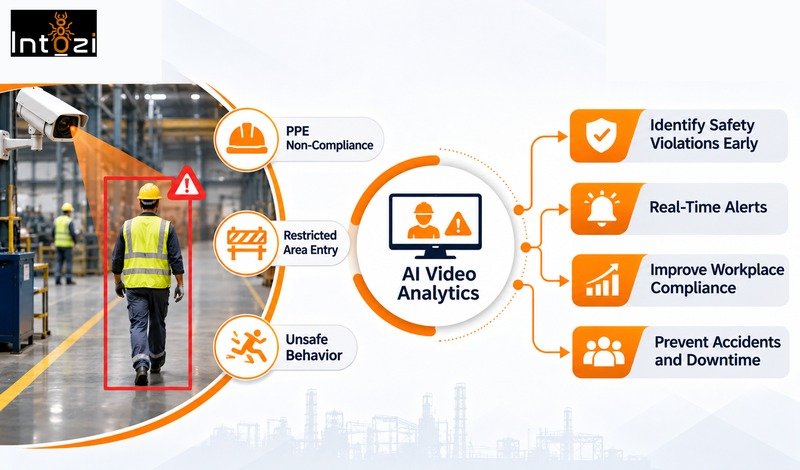
Workplace safety is a critical responsibility for businesses operating in manufacturing plants, warehouses, construction sites, and other industrial environments. Employees working without appropriate protective equipment can face serious risks, while missed safety violations can lead to injuries, operational disruptions, and compliance issues. Modern AI PPE detection software helps organisations identify selected safety violations through computer vision, making it easier to recognise potential risks and take corrective action before situations escalate.
Instead of depending entirely on manual inspections, businesses can use AI-powered video analytics to analyse compatible camera feeds, identify whether required protective equipment is visible, and generate alerts when configured safety conditions are not met. This creates an additional layer of workplace safety support.
Why Do Workplace Safety Violations Occur in Industrial Environments
Workplace safety violations can happen even when organisations have established safety policies and employee training programmes. Large facilities, changing work conditions, and multiple operational activities can make consistent supervision challenging.
Some common reasons include:
- Incorrect PPE usage: Employees may wear protective equipment improperly or remove it during work.
- Missing protective equipment: Workers may enter designated areas without helmets, safety jackets, gloves, or other required PPE.
- Limited supervision: Safety teams may not be able to observe every workstation continuously.
- Changing work environments: Different activities may require different protective equipment.
- Delayed identification: Manual inspections may not identify every violation as it occurs.
Identifying these issues early allows safety teams to investigate potential violations and reinforce workplace safety practices.
How AI PPE Detection Software Identifies Missing Protective Equipment
AI PPE detection software uses computer vision models to analyse video footage and identify visible protective equipment on workers. Depending on the configured application, the system can recognise items such as safety helmets, reflective jackets, and other specified PPE.
A typical detection process includes:
- Camera input: Compatible CCTV cameras provide video feeds from designated work areas.
- Visual analysis: AI models examine video frames to identify workers and visible protective equipment.
- Compliance assessment: The system checks detected items against configured safety requirements.
- Violation identification: Potential instances of missing or incorrectly worn PPE are identified.
- Alert generation: Relevant personnel receive notifications through the configured alert workflow.
- Human verification: Safety teams review events and determine the appropriate corrective action.
The accuracy of detection depends on camera positioning, image quality, lighting, occlusion, and model configuration.
What Makes PPE Detection Software Useful for Workplace Safety
Traditional safety inspections remain important, but they may be limited by the number of employees, work areas, and activities that supervisors can observe at a given time.
PPE detection software can add automated visual checks to existing safety procedures, helping organisations identify configured violations across camera-covered areas.
Key applications include:
- Detecting workers without safety helmets in designated zones.
- Identifying missing high-visibility jackets.
- Checking selected protective equipment requirements.
- Highlighting potential PPE violations for further investigation.
- Supporting safety reviews through relevant video footage.
For example, in a manufacturing facility where helmets are mandatory, configured analytics can identify workers entering a designated area without visible helmets and generate an alert for the safety team.
How AI PPE Compliance Software Helps Standardise Safety Practices
Different work areas often have different protective equipment requirements. A production floor, loading dock, chemical handling area, and maintenance zone may each require specific safety equipment.
AI PPE compliance software can help organisations configure detection rules according to the requirements of designated areas.
This can support:
- Area-specific PPE detection rules.
- Identification of selected safety equipment violations.
- Consistent visual checks across camera-covered locations.
- Event-based alerts for responsible personnel.
- Review of recurring safety issues.
By identifying repeated patterns, organisations can understand where additional employee training, supervision, or safety improvements may be needed.
How Personal Protective Equipment Detection Supports Industrial Risk Prevention
Personal protective equipment detection helps identify whether workers appear to be wearing required protective items in designated areas. It can support safety teams in identifying potential gaps before they contribute to more serious incidents.
Common applications include:
- Helmet detection in manufacturing and construction areas.
- Reflective jacket detection in vehicle movement zones.
- Safety vest identification in warehouses and loading docks.
- Selected protective equipment checks in restricted work areas.
- Detection of configured PPE requirements around machinery.
However, visual detection has limitations. A camera may identify the presence of a helmet without confirming whether it is correctly fitted or meets the required safety standard. Human inspections and established safety procedures remain necessary.
Why Businesses Need PPE Compliance Monitoring Software
Maintaining consistent safety practices across multiple departments and facilities requires regular assessment. PPE compliance monitoring software can help organisations review safety-related events and identify recurring patterns across designated camera-covered areas.
It can support safety teams by helping them:
- Identify repeated PPE violations.
- Review safety events from different work areas.
- Understand which locations require additional supervision.
- Evaluate recurring compliance issues.
- Prioritise corrective actions and employee training.
This information can help businesses strengthen safety practices instead of relying only on occasional inspections.
How AI Workplace Safety Software Improves Industrial Safety Management
AI workplace safety software can support broader safety applications beyond PPE identification. When configured for specific requirements, computer vision can help identify selected unsafe activities and potential hazards across operational environments.
For example, AI-powered video analytics may support:
- Restricted-area entry detection.
- Unsafe proximity between vehicles and pedestrians.
- Selected unsafe workplace activities.
- PPE-related violations.
- Detection of configured fire and smoke events.
These applications help safety teams gain additional visibility into workplace conditions and investigate potential risks. They should complement risk assessments, employee training, safety audits, and direct supervision.
How AI Safety Compliance Software Supports Smarter Factory Operations
AI safety compliance software helps organisations identify configured safety-related events through automated video analysis. When integrated into existing operational workflows, it can help responsible teams receive relevant information and investigate potential non-compliance more efficiently.
An effective system should support configurable detection requirements, compatible camera infrastructure, event notifications, and relevant reporting capabilities.
For manufacturing and industrial businesses, industrial PPE detection software can be particularly useful in areas where protective equipment requirements vary according to the activity being performed.
With a properly configured PPE detection system, organisations can improve visibility into selected safety practices and use detection results to support corrective action.
How PPE Compliance Analytics Helps Businesses Improve Safety Performance
Identifying individual violations is useful, but understanding recurring patterns can help organisations make better long-term decisions. PPE compliance analytics can help safety teams review detection events and identify areas where compliance needs improvement.
For example, repeated helmet-related violations in a particular production zone may indicate a need for additional employee awareness, better equipment availability, or stronger supervision.
By reviewing available analytics, businesses can:
- Identify frequently reported PPE violations.
- Compare safety-related events across designated areas.
- Recognise recurring compliance gaps.
- Prioritise workplace safety improvements.
- Evaluate the impact of corrective measures over time.
These insights can support a more structured approach to workplace safety management.
Strengthening Workplace Safety With Intozi and Ikshana
Identifying workplace safety violations requires more than occasional inspections. Businesses need practical ways to recognise potential risks, review incidents, and improve compliance across operational environments. Intozi‘s Ikshana is a Vision AI platform that supports configurable video analytics applications, including PPE detection and workplace safety use cases. Using compatible camera feeds and configured AI models, Ikshana can identify selected protective equipment and potential safety violations, helping organisations generate relevant alerts and improve visibility into workplace conditions. This allows businesses to strengthen existing safety procedures with AI-based detection while keeping human supervision and corrective action central to safety management.
Frequently Asked Questions (FAQs)
How does AI PPE detection software identify safety violations?
AI PPE detection software analyses video footage to identify workers and visible protective equipment, such as helmets and reflective jackets. Intozi’s Ikshana platform supports configurable PPE detection applications that can identify potential violations through compatible camera feeds.
What types of protective equipment can a PPE detection system identify?
Depending on model configuration and image quality, a PPE detection system may identify safety helmets, reflective jackets, safety vests, and other specified visible protective equipment. Intozi’s Ikshana platform supports configurable Vision AI applications based on workplace safety requirements.
Can AI PPE compliance software monitor multiple factory areas?
Yes. AI PPE compliance software can support detection across multiple camera-covered areas, provided the deployment has suitable infrastructure and configured analytics. Intozi’s Ikshana platform can support enterprise video analytics applications across different industrial environments.
How does PPE compliance monitoring software help reduce workplace risks?
It helps identify potential PPE violations, generate relevant alerts, and provide information for safety teams to investigate. Intozi’s Ikshana platform supports configured PPE detection use cases that can strengthen existing workplace safety procedures.
Is AI workplace safety software a replacement for manual safety inspections?
No. AI workplace safety software provides additional detection and visibility but cannot replace physical inspections, employee training, risk assessments, or safety supervision. Intozi’s Ikshana platform is designed to complement established safety processes through configurable Vision AI applications.