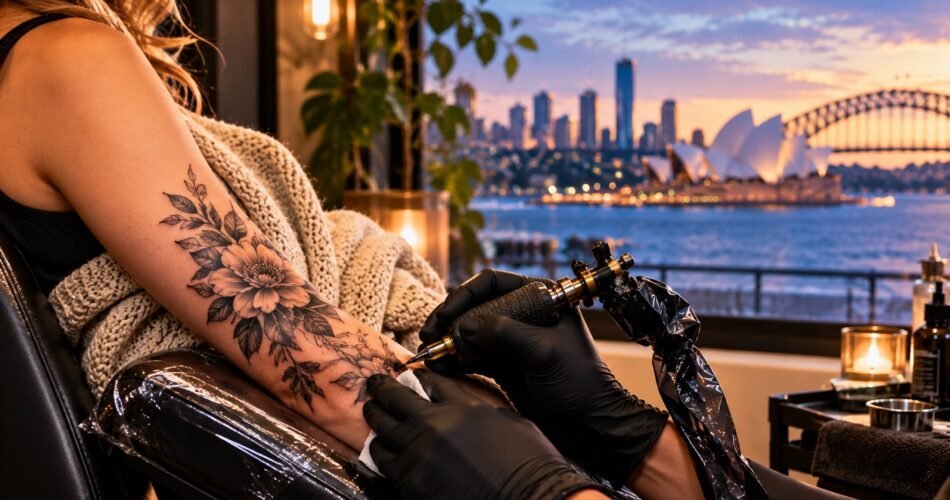
Having a tattoo partner, sibling, or best friend makes body art a shared accomplishment. But when it comes to joint ink, there is a harmonious balance between the symbolism of the design and the personal fashion preferences of the wearer. Being able to differentiate between identical matching tattoos and cohesive complementary tattoos means both people are leaving with art that is genuine, stylish, and forever.
What is the core difference between matching and complementary tattoos?
The matching tattoos will have the same design, size, and sometimes even the same location, e.g., the matching fine line hearts, the coordinate system, or the same minimalist script. They represent real unity and equality. The role of Gold Coast tattoo artists, or other prominent ones, is to do such tattoos.
The complementary tattoos are not about exact matching but harmony. The designs can be viewed as two separate parts of a unified narrative, like a sun and a moon; like interlocking puzzle shapes; like a split botanical stem; or in other variations that each person can develop in their own style while maintaining individual distinctiveness.
When should you choose complementary designs over identical ones?
Complementary designs work best for those who are already tattooed and have different styles or skin tones.
For some, the style will be bold, traditional linework; for others, it will be delicate single-needle micro-art; complementary themes seamlessly link both styles.
Standalone Integrity: A good complementary tattoo will look complete on its own, without one person feeling their tattoo looks unfinished when separated from the rest.
How do you align placements when skin anatomy and wardrobes differ?
Placing in the same direction does not have to make the picture look the same. Rather, match the degree of visibility and anatomical flow:
Mirrored Placements: When standing side-by-side, left wrist facing right collarbone, right wrist facing left collarbone, or left ankle facing right ankle.
Lifestyle-Aligned Zones: If one is working in a conservative corporate work environment and the other is working in a creative studio, one can be placed on the upper ribs and the other on the forearm, a part of the forearm that is used during the day, to respect the different work environments of the day while keeping the connection.
What planning steps ensure a smooth joint studio session?
Partnering with a professional artist makes the creative process that much easier and eliminates awkward compromises:
Identify the Shared Narrative: Pre-agree on the main memory, inside joke, or value before looking at reference pictures.
Request a Joint Consultation: Schedule a time to meet with your artist together, allowing them to size both stencils to each person’s body size.
Try to avoid literal partner names unless referring to a family member or children, as it can become dated with the evolution of life. The use of the Gold Coast tattoo shop and other places can help with the joint studio session.
Conclusion
Planning tattoos with friends and family is a creative compromise, whether it’s identical matching symbols or matching yet harmonious complementary designs. You want to focus on standout artwork, custom placement, and a shared story to make your shared ink a priceless reminder of your relationship.