If chemistry is the grand idea—the beautiful symphony written on paper—then the chemical manufacturer is the conductor, the orchestra, and the concert hall all rolled into one. This is where theoretical science gets a hard hat, gets its hands dirty, and meets the real world at a colossal scale. The chemical manufacturer is the entity that says, “That’s a brilliant molecule you designed in the lab. Now, let’s figure out how to make 10,000 tons of it, safely, reliably, and for a profit.” It’s the thrilling, gritty, and awe-inspiring realm where blueprints become bulk.
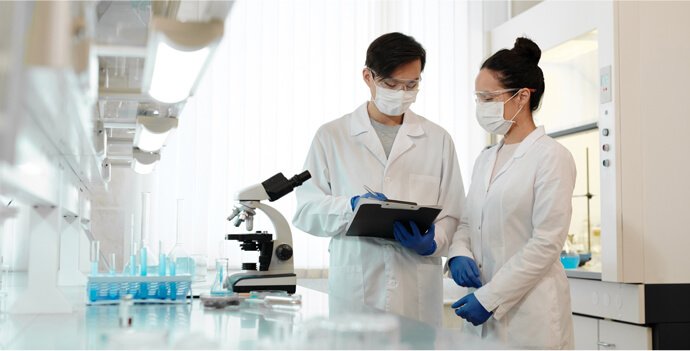
Let’s be clear: the R&D lab and the manufacturing plant of a chemical manufacturer are different universes. In the lab, a chemist in a pristine coat might produce 10 beautiful grams of a new polymer after a week of painstaking work. The job of the chemical manufacturer is to “scale up” that process a million-fold. This is the domain of chemical engineers, and it’s arguably one of the hardest disciplines on the planet. It’s not just about making it bigger; it’s about mastering the physics of heat transfer, fluid dynamics, and mass flow on a monumental scale. A reaction that’s easy to control in a 5-liter flask can behave wildly (or explode) in a 50,000-gallon reactor. The chemical manufacturer must reinvent the process for the real world, designing and building the colossal steel beasts—the distillation columns, the cracker furnaces, the polymerization vessels—that will become the beating heart of the operation.
The culture inside a major chemical manufacturer is a unique blend of disciplines. You have the “plant people”—the operators and engineers who live and breathe the facility. Their gospel is OEE (Overall Equipment Effectiveness), and their pride is in keeping the complex, 24/7 operation running smoothly, safely, and efficiently. A one percent improvement in yield or a reduction in energy use can mean millions in annual savings. Then you have the “commercial people,” who are constantly talking to customers, reading markets, and deciding whatto make and when. They’re navigating the rollercoaster of feedstock prices (like oil and gas) and trying to time the market perfectly. The most successful chemical manufacturers are the ones where these two worlds—operations and commerce—speak the same language and move in sync.
Today, the chemical manufacturer is at a historic crossroads, facing its greatest challenge and opportunity: reinventing itself for a sustainable future. The old model of “take fossil fuels, make stuff, sell it” is being fundamentally challenged. The forward-thinking chemical manufacturer is now asking: Can we run our cracker on plastic waste instead of crude oil? Can we capture the CO2 from our smokestack and turn it into a valuable product? Can we power our massive energy-hungry plant with green hydrogen? This isn’t just PR; it’s an existential redesign of the core business. The chemical manufacturer of the future will be a hybrid beast: part traditional industrial powerhouse, part advanced recycling hub, part carbon-capture innovator.
So, the next time you drive past one of those vast industrial complexes with a labyrinth of pipes and flashing lights, don’t just see a factory. See a chemical manufacturer in action. See the place where human ingenuity wrestles with the laws of physics and economics to materialize the modern world. It’s a place of fire, steam, and intellect, where abstract science is forged, ton by ton, into the tangible reality of progress. It’s messy, it’s complex, and it is utterly essential.