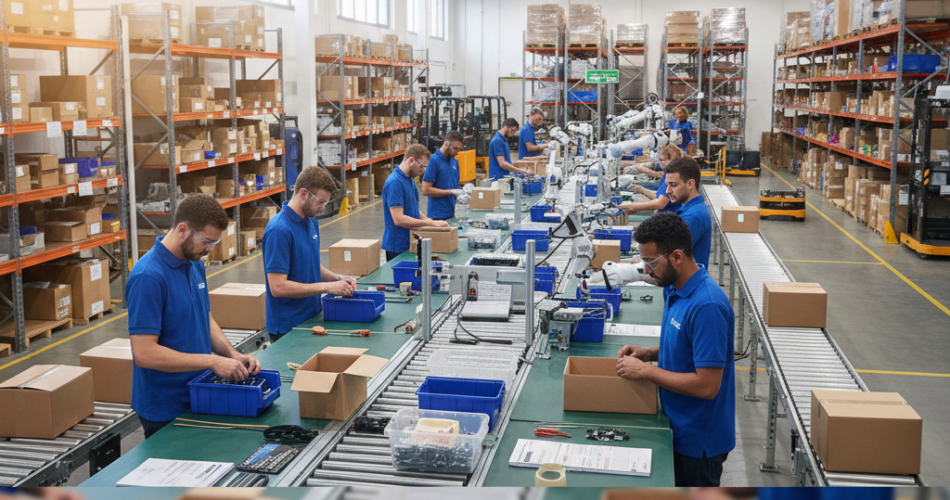
In modern business operations, accuracy is more than a goal—it is a necessity. Companies face increasing pressure to deliver the right products, in the right quantities, and on time. Yet, as order volumes grow and product lines expand, maintaining accuracy often seems to add layers of complexity to operations. Enter Kitting and Assembly, a practical solution that enhances accuracy without burdening workflows. Many businesses are turning to Kitting and Assembly to streamline processes, reduce errors, and maintain operational simplicity even in the most demanding environments.
By pre-organizing products and components into ready-to-use kits or partially assembled units, companies can simplify their operations while ensuring consistency. This approach is reshaping the way supply chains, warehouses, and fulfillment centers operate, making accuracy achievable without extra headaches.
Understanding Kitting and Assembly
To appreciate how kitting and assembly improve accuracy, it’s important to understand what these processes involve.
Kitting Explained
Kitting is the process of combining multiple individual items into a single, ready-to-ship or ready-to-use package. Each kit contains all the components required for a specific order, project, or product configuration. By treating multiple items as a single unit, businesses reduce the likelihood of missing components or mis-picks.
The Role of Assembly
Assembly takes kitting a step further by physically joining components into a semi-finished or finished product. This might involve attaching parts, organizing sets, or preparing products so they are ready for immediate use. Together, kitting and assembly transform multiple steps into a streamlined, manageable workflow.
Why Accuracy Matters More Than Ever
Errors in operations are expensive, both financially and reputationally. From mis-picks and incomplete orders to returns and dissatisfied customers, mistakes can disrupt the flow of business. Accuracy directly affects:
Customer Satisfaction
Receiving exactly what was ordered builds trust and encourages repeat purchases.
Operational Efficiency
Fewer errors mean less time spent on corrections, returns, or rework, freeing up resources for productive tasks.
Cost Control
Errors are costly. They generate additional labor, shipping, and inventory expenses. Accurate fulfillment reduces these hidden costs.
Kitting and assembly address all these concerns by introducing standardized, repeatable processes without making workflows more complicated.
How Kitting and Assembly Enhance Accuracy
The benefits of kitting and assembly go beyond just grouping items together. They create a system that naturally reduces errors.
Pre-Configured Units Reduce Mistakes
By preparing kits in advance, workers handle complete packages rather than individual components. This eliminates the chance of missing items or including incorrect parts during order fulfillment.
Simplified Inventory Tracking
Managing inventory at the kit level reduces confusion. Instead of tracking dozens of individual SKUs, businesses can monitor single units, simplifying stock management and replenishment planning.
Standardization Leads to Consistency
Kits are assembled according to a predefined standard. This ensures that every product or package leaving the facility meets the same quality and content criteria, reducing variability and increasing reliability.
Applications Across Industries
Kitting and assembly are valuable in a wide range of sectors, from e-commerce to manufacturing, healthcare, and education.
E-Commerce and Retail
Retailers and subscription-based services benefit from kitting by delivering complete bundles or promotional packages. Customers receive exactly what they expect in one package, reducing complaints and returns.
Manufacturing and Industrial
Manufacturers create kits that include all parts necessary for a specific assembly line task or project. This ensures production flows smoothly and reduces downtime caused by missing components.
Healthcare and Education
Medical kits, lab sets, and educational toolkits rely on accuracy. Kitting ensures that every kit is complete and ready to use, critical in environments where errors can have serious consequences.
Maintaining Simplicity While Improving Accuracy
A key advantage of kitting and assembly is that they increase accuracy without complicating operations.
Streamlined Workflows
Workers handle kits as single units, which simplifies picking, packing, and shipping. This reduces decision fatigue and the likelihood of mistakes.
Reduced Training Requirements
Standardized kits make onboarding new staff easier. Employees can quickly learn the workflow without memorizing numerous individual SKUs or complex procedures.
Efficiency Without Extra Steps
Kitting and assembly consolidate multiple operations into one step, which means accuracy improves without adding additional processes or paperwork.
Technology’s Role in Supporting Accuracy
Modern technology enhances the effectiveness of kitting and assembly.
Inventory Management Systems
Real-time tracking helps ensure that all components are available and accounted for, reducing missing parts and stock discrepancies.
Automation and Scanning
Barcode scanning, automated packing, and digital tracking minimize human error and ensure that kits are assembled and shipped correctly.
Overcoming Common Challenges
While kitting and assembly simplify operations, careful planning is required to maximize benefits.
Component Availability
Kits are only effective if all components are present. Forecasting, supplier coordination, and timely replenishment are crucial.
Quality Control
Regular checks during assembly ensure kits meet standards consistently, preventing mistakes from reaching the customer.
Flexibility and Adaptability
Operations must accommodate changes in demand or product offerings. Kitting allows businesses to adapt without complicating existing workflows.
Best Practices for Effective Kitting and Assembly
Implementing kitting and assembly successfully requires strategic practices.
Standardize Processes
Clear instructions and repeatable steps help maintain accuracy and make training more effective.
Monitor Metrics
Tracking order accuracy, processing time, and inventory turnover highlights inefficiencies and opportunities for improvement.
Design with the End User in Mind
Kits should be organized and functional for the customer. A well-designed kit enhances usability and satisfaction.
The Strategic Advantage
Accuracy is a key differentiator in today’s competitive market. Kitting and assembly provide a structured, repeatable approach that reduces errors, improves efficiency, and maintains simplicity. Businesses gain a competitive edge by delivering consistent products, enhancing customer trust, and reducing operational risk—all without adding unnecessary complexity.
Conclusion
In a business environment where accuracy is critical and operations are increasingly complex, kitting and assembly offer a practical, elegant solution. By organizing components into ready-to-use kits and pre-assembling products where necessary, companies improve accuracy, reduce errors, and maintain streamlined workflows. The result is operational efficiency, satisfied customers, and a strong foundation for scalable growth.