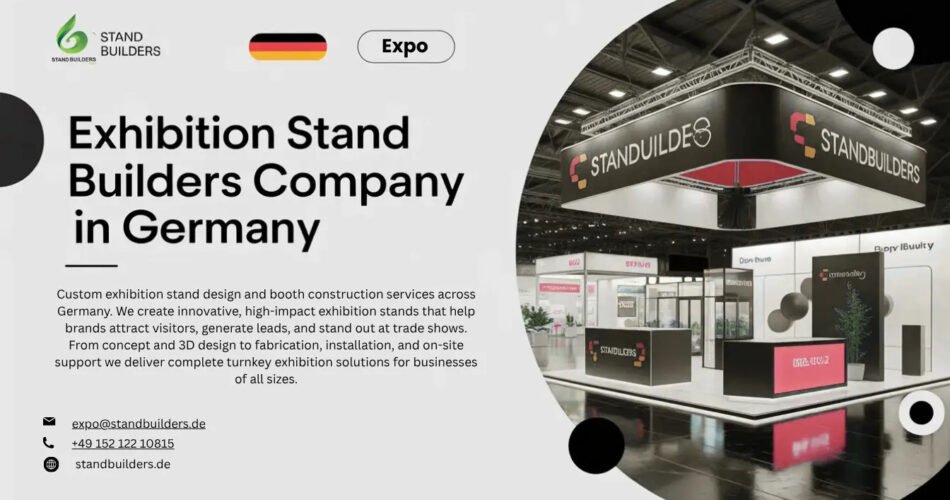
Germany is well known as a destination for international trade exhibitions, there being important events in fields such as engineering, automotive, technology, healthcare, logistics, manufacturing, and energy. For companies taking part in such events, the exhibition stand has a number of functions. It promotes the brand, displays the products, offers opportunities for meetings, and provides a physical environment for professional interactions.
A company in Germany which manufactures exhibition stands can help achieve this by combining creative design with practical construction and the needs of the venue. Yet the success of an exhibition stand is mainly determined by the extent to which the project is planned prior to construction starting.
Why German Exhibitions Require Careful Planning
German trade fairs usually draw together a mix of local experts, foreign buyers, industry specialists, journalists, and business partners. As a result, exhibitors find themselves with very little time in which to communicate the value of what they have to offer.
A stand must therefore be easily understandable at a first glance; the company’s name, its main message, the products, and the significant visual elements should have a logical connection rather than struggle for attention.
Various exhibitions attract different kinds of audiences. For example, a technical exhibition will need product specifications and demonstration areas, while a consumer-oriented exhibition will place greater emphasis on visual presentation and interaction.
Because of this, German exhibition stand builders generally have to take into account the event, the audience, the available space, and the business objectives when coming up with an appropriate concept.
Starting the Exhibition Planning Process
The planning of an exhibition usually starts by establishing its main aim, and companies take part in order to generate leads, launch products, meet their existing clients, set up partnerships, or increase awareness among a specific industry.
Almost every later decision is influenced by the objective; for example, a company that holds business meetings will need a number of comfortable areas for discussion, whereas one that is showing off its equipment will require an open demonstration area.
The sizes and positions should also be looked at at an early stage; corner and island locations allow for several access points for visitors, while smaller inline areas require a careful use of their frontage.
Another important point to consider is the venue regulations. Before construction begins, matters such as technical requirements, installation schedules, electrical services, suspended structures, fire regulations, and delivery procedures may all have to be dealt with.
Modern Exhibition Stand Design Approaches
Today’s exhibition stands tend to blend branding with functionality. Rather than covering all the available space with graphics and furniture, designers usually set up separate areas for reception, for the presentation of products, for meetings, for demonstrations, and for storage.
Open and Accessible Layouts
Open plans can make a stand seem more approachable since people should be able to see where they can go in and move around the area without having to come across unnecessary physical obstacles.
Interactive Product Presentation
Technology should be used only when it actually improves how products are communicated to customers. Although touchscreens, digital demonstrations, augmented realities, and large displays can help in explaining complicated products, they are most effective when linked to a specific visitor goal.
Comfortable Meeting Areas
Since B2B exhibitions usually involve in-depth conversations, it makes sense to have dedicated meeting areas—this is especially true for companies that are selling technical products, entering into partnerships, or dealing with long sales cycles.
The design of an exhibition stand in Germany brings these elements together without having one feature dominate the whole surroundings.
Budgeting for an Exhibition Stand
The price of an exhibition stand is influenced by a number of factors beyond its physical size. The method of construction, the materials used, the graphics, the lighting, the furniture, any technology incorporated, transportation, installation, dismantling, storage, and the venue’s services are all things that can affect the final cost.
Since modular systems allow for repeated use, greater design flexibility can be achieved through custom construction. Businesses that take part in a number of exhibitions should therefore consider whether the components can be reused or modified for future events.
It may be helpful when evaluating different companies that build stands in Germany to look at the full range of services offered rather than considering only the quoted construction price. A smaller first figure does not necessarily mean that the same range of services is included as in the case of another offer.
Sustainability in German Exhibition Spaces
Environmental factors are having a greater and greater influence on the way in which exhibitions are designed. Companies are looking into the use of reusable structures, recyclable materials, energy-efficient lighting, and designs that are capable of being used at a number of different events.
A reusable stand can also ensure consistent branding in different locations. When businesses take part in exhibitions in several countries, exhibition stand builders in Europe can produce adaptable structures which can be altered to meet different floor plans and venue requirements.
It would be best to take sustainability into account when designing rather than adding it in after the construction decisions have already been made.
Common Challenges Exhibitors Should Anticipate
Late planning is still a major problem since custom designs take a long time to develop the concept, to obtain approvals, to produce the technical drawings, to manufacture the items, to print them, to transport them and to install them.
A frequently encountered issue is insufficient storage. The staff in charge need room for their personal possessions, marketing materials, packaging, and various supplies. If adequate planning is not carried out, these items may end up being visible and will thus diminish the professional look of the stand.
Overcrowding can lead to yet another problem: if there are too many displays, screens, furniture items, and messages then the stand becomes hard to navigate.
Companies may also fail to take into account the need to dismantle and transport the equipment. A stand which is simple to assemble does not mean that it will likewise be easy to take apart, to transport, to store, or to reuse.
Evaluating Exhibition Stand Professionals
If businesses are thinking of hiring an Exhibition Stand Contractor in Germany, then practical experience should be one of the factors they take into account. They could look at the contractor’s earlier projects, their knowledge of exhibition venues, their production capabilities, their project management procedures, the way they handle installations, and the range of materials available.
When companies are looking for builders of exhibition stands in Germany they should also consider how clearly the various responsibilities are established. If people are known who are in charge of design approval, production, logistics, installation and dismantling, this will help to avoid confusion during the project.
The same principle is true when you are looking for Exhibition Stand Builders in Germany for international events; to have a successful project it is necessary to coordinate creative decisions with operational requirements.
Making the Stand Work Beyond Appearance
A stand that is visually striking doesn’t have to be effective if people are unable to understand what it’s meant to do. Generally, the most effective ideas link their appearance with practical business goals.
Branding is about creating recognition, whereas product displays are meant to give out relevant information. Meeting areas should encourage conversation and technology should have a specific function.
The way that staff are positioned is also important; even if the stand has been carefully designed it can still seem inaccessible if the representatives obstruct the entrances or make the visitors uncomfortable. Staff therefore being trained before the event can serve to complement the physical design.
Conclusion
To take part in an exhibition in Germany successfully entails much more than just setting up an attractive booth; businesses must consider their objectives, audience expectations, the amount of floor space available, visitor movement, budget, sustainability, logistics, and the requirements of the venue from the start.
Exhibition Stand Builders Company in Germany which provides exhibition stand building can play a useful role in this process by assisting in turning these requirements into a practical exhibition environment, and the best method is usually that in which design choices are based on purpose rather than merely on appearance.
If businesses make realistic plans, keep communication clear, and attend to both the visitor experience and the operational details, they will be able to design exhibition spaces that encourage professional discussions and clearly present their brands during the event.
FAQs
Before designing an exhibition stand in Germany, what ought businesses to take into account?
When planning for the exhibition, businesses should take into account the exhibition objective, the target audience, the size of the stand, the location, the budget, the branding requirements, visitor flow, the need to meet customer requirements, the technology to be used, the logistics involved, and the venue regulations.
Is it more expensive to have custom exhibition stands than modular stands?
Since custom stands tend to have higher production costs they offer greater flexibility with regard to architecture, materials, and branding, while modular stands can provide more adaptability when it comes to multiple exhibitions.
What are the ways of keeping exhibition stand costs under control?
It is possible to control costs by setting up a realistic budget at the beginning, giving priority to the essential features, choosing appropriate materials, and taking into account the use of reusable components for future exhibitions.
What is the role of lighting in the design of exhibition stands?
Lighting can enhance the visibility of products, emphasize the key branding elements, establish a visual focus, and help to create the overall atmosphere of the stand.
What grounds there are for planning exhibition logistics in advance?
All the activities involved transportation, installation, obtaining the necessary technical approvals, meeting the venue deadlines, and dismantling take place according to set schedules. Coordinating early on helps to lower the chances of delays and last-minute problems.