Modern vs. Antique: Choosing Your Dream Cushion Cut Diamond
A cushion cut diamond has a distinctive personality that sits somewhere between classic romance and contemporary design. Its softly rounded corners, broad facets, and square-to-rectangular outline give it a recognizable presence without feeling overly conventional. Yet choosing the diamond itself is only part of the decision. The style you select can completely change how your ring looks and feels.
For couples deciding between modern and antique-inspired designs, the difference often comes down to more than appearance. Faceting, proportions, setting details, metal choice, and the overall character of the ring all influence the final result. Understanding these differences can make it easier to select a cushion cut diamond that feels connected to your personal taste rather than simply following a trend.
What Makes a Cushion Cut Diamond So Appealing?
The cushion cut has been loved for generations because of its combination of soft edges and substantial appearance. Unlike sharply defined square shapes, its corners are gently curved, giving the stone a romantic outline. Depending on its proportions and faceting pattern, a cushion can appear almost square or noticeably elongated.
Modern cutting techniques can produce cushion diamonds with carefully controlled proportions and facet arrangements designed to emphasize brightness and visual balance. Antique-style cushions, on the other hand, often embrace characteristics associated with older cutting methods, such as larger facets and a broader, more distinctive visual pattern.
That difference means two cushion diamonds with similar carat weights can look surprisingly different. One may have a crisp, contemporary appearance, while another may feel warmer, softer, and more reminiscent of an heirloom.
Modern Cushion Cut Diamonds: Clean and Contemporary
A modern cushion cut diamond is an excellent choice for someone who appreciates a refined and current appearance. Contemporary cushions are often selected for their precise proportions and carefully evaluated optical performance. The goal is generally to create a stone that interacts effectively with light while maintaining the recognizable cushion silhouette.
Modern cushion cuts work especially well with streamlined settings. A simple solitaire can place all attention on the center diamond, while a sleek halo can add additional presence around the stone. Minimal prongs and polished bands can further reinforce the clean character of the design.
A modern cushion cut engagement ring can also be customized in several ways. White gold or platinum can create a crisp appearance, while yellow or rose gold can introduce warmth without making the design feel traditional.
For someone who wants a ring that feels polished, structured, and contemporary, a modern cushion may be the natural choice.
Antique Cushion Cut Diamonds: Character With a Vintage Feel
Antique-style cushion diamonds offer a different experience. Instead of focusing exclusively on precision and uniformity, these stones can showcase the visual character associated with earlier diamond-cutting traditions.
Many antique-inspired cushions feature larger facets that create broader flashes across the stone. Their appearance can be less uniform than a modern cut, but that variation is often part of their appeal. The diamond may have a softer glow and a distinctive pattern that makes it feel individual.
Antique-style diamonds are particularly attractive when paired with vintage-inspired settings. Milgrain edges, engraved details, delicate shoulders, and ornate galleries can complement the stone without overwhelming its shape.
For someone drawn to jewelry with history-inspired character, an antique cushion can feel more personal than a highly standardized modern design.
Modern vs. Antique Cushion Cuts: What Is the Main Difference?
The biggest difference is often found in the way the diamond interacts with light and how its facets are arranged.
Modern cushion cuts are generally designed with contemporary cutting standards in mind. Their facet patterns can create lively flashes and a balanced distribution of light. Buyers who prioritize brightness and precise proportions may prefer this approach.
Antique-style cushions tend to place more emphasis on facet size, visual character, and the appearance associated with older diamonds. Their larger facets can produce broader flashes rather than the finer visual activity found in some modern stones.
Neither style is automatically better. The right choice depends on what you want to notice when you look at your ring.
If you prefer a crisp and carefully proportioned appearance, modern may suit you. If you love individuality, old-world character, and a softer visual personality, antique may be more appealing.
How the Setting Changes the Personality of Your Cushion Diamond
The setting can dramatically influence the final appearance of your diamond. A cushion stone placed in a minimalist solitaire can look completely different from the same shape surrounded by intricate detailing.
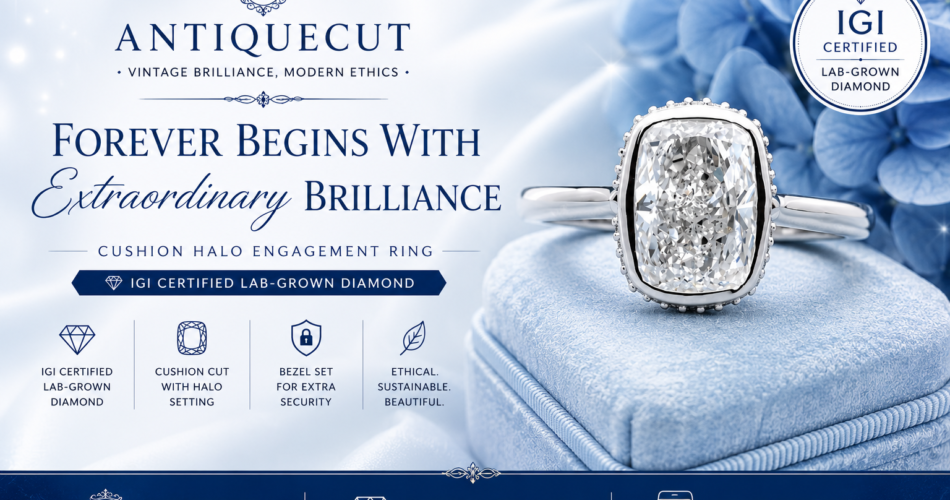
A cushion cut hidden halo engagement ring is one option for adding subtle detail without making the surrounding diamonds the main focus. The hidden halo sits beneath the center stone, giving the ring additional dimension when viewed from the side while maintaining a relatively clean appearance from above.
Similarly, a hidden halo cushion cut engagement ring can combine a contemporary center stone with a more decorative construction. This makes the style useful for someone who wants a balance between understated design and additional detailing.
For a more traditional appearance, consider a setting with engraving, milgrain, or decorative shoulders. These details can make an antique-style cushion feel like a treasured piece from another era.
Choosing Between a Cushion Solitaire and Halo
A solitaire is one of the most straightforward ways to showcase a cushion diamond. Without surrounding stones competing for attention, the center stone becomes the visual focus. This can be particularly effective when the diamond has an interesting facet pattern or distinctive proportions.
A halo setting creates a different effect. Smaller diamonds surround the center stone, visually increasing its presence and adding another layer of detail to the ring.
If you want something understated and easy to style, a solitaire may be the better option. If you prefer a more decorative ring with additional diamond detail, a halo or hidden halo can provide the look you want.
When considering a cushion cut engagement ring, it is worth viewing the center stone in several settings before making your final choice. The same diamond can take on an entirely different character depending on its surrounding design.
How Proportions Affect a Cushion Cut Ring
Cushion diamonds are not all shaped the same way. Some have nearly equal length and width, creating a traditional square cushion appearance. Others are more elongated, producing a rectangular outline.
Your preferred proportion should reflect both your personal style and the setting you intend to use.
A square cushion can create a compact and classic appearance, while an elongated cushion can give the finger a longer visual line. An elongated stone can also work particularly well in settings where the center diamond is positioned vertically.
When comparing diamonds, avoid choosing solely based on carat weight. Look at the actual dimensions, length-to-width ratio, facet pattern, and overall appearance. Two stones of the same weight can have noticeably different visual coverage.
The Importance of Color and Clarity
Color and clarity also influence how your cushion diamond looks. Cushion cuts can sometimes reveal color differently depending on their faceting and proportions, so examining the actual stone is important.
If you prefer a bright, crisp appearance, you may lean toward a higher color grade. If you are drawn to warmer tones, a slightly lower color grade can sometimes complement yellow or rose gold beautifully.
Clarity should also be considered carefully. Because cushion diamonds can have broad facets, certain inclusions may be easier to notice depending on their location. Instead of automatically choosing the highest clarity grade, examine whether inclusions are visible to the naked eye and compare stones within your budget.
For anyone wanting to know more in detail about cushion cut engagement ring choices, looking at the diamond and setting together can provide a much clearer understanding of how these factors work as a whole.
Which Metal Works Best With Your Style?
Metal choice can reinforce either a modern or antique-inspired direction.
Platinum and white gold can give a cushion ring a clean and contemporary appearance. They work especially well with minimalist settings, sleek bands, and modern halo designs.
Yellow gold can create a warmer, heritage-inspired look. It pairs naturally with antique-style cushion diamonds and detailed settings. Rose gold offers another warm alternative, bringing a softer color contrast to the center stone.
There is no strict rule that says modern diamonds require white metal or antique diamonds require yellow gold. Mixing elements can actually create a more personalized result. A modern cushion in yellow gold, for example, can feel fresh while retaining a hint of traditional character.
Think About Your Everyday Style
Your engagement ring should fit into your everyday wardrobe and jewelry preferences. Someone who typically wears simple pieces may prefer a streamlined cushion solitaire. Someone who enjoys vintage clothing, ornate jewelry, or heirloom-inspired accessories may naturally gravitate toward an antique-style cushion with decorative details.
Consider how the ring will look from different angles, not just from directly above. The gallery, prongs, band profile, and side detailing can become important parts of the design.
If you want a cushion cut ring that feels distinctive without being overly ornate, a hidden halo can offer an interesting compromise. It provides extra detail while keeping the top view relatively refined.
Where Antiquecut Fits Into the Cushion Cut Conversation
For shoppers exploring different approaches to engagement ring design, Antiquecut offers a natural reference point for considering vintage-inspired aesthetics alongside contemporary preferences. The important thing is to focus on the combination of center stone, setting, metal, and proportions rather than selecting a style simply because it is labeled modern or antique.
A thoughtfully chosen ring can combine elements from both directions. Modern cutting can be paired with vintage-inspired details, or an antique-style diamond can be placed in a cleaner contemporary setting.
Making the Final Decision
Choosing between a modern and antique cushion diamond ultimately comes down to the kind of character you want your ring to express.
Choose a modern cushion if you are attracted to controlled proportions, contemporary faceting, clean settings, and a polished appearance. Consider an antique-style cushion if you prefer larger facets, individual character, warmer visual qualities, and settings inspired by earlier jewelry designs.
You do not necessarily have to choose one direction completely. A modern cushion with an antique-inspired setting can create contrast, while an antique-style diamond in a simple solitaire can feel surprisingly contemporary.
Before buying, compare several cushions side by side. Look at their proportions, facet patterns, color, clarity, dimensions, and how each one interacts with the setting you prefer. Pay attention to what catches your eye naturally rather than relying only on specifications.
The ideal engagement ring is not simply the one with the most impressive numbers. It is the one whose shape, character, and design feel right when you see it on your hand. Whether your heart leans toward modern precision or antique-inspired charm, a carefully selected cushion cut diamond can become the foundation of a ring that feels distinctly yours.